

How to Pay Quarterly Estimated Taxes with a Credit Card to Generate Free Business Class Flights
Master paying quarterly estimated taxes with credit card for points. Leverage IRS fee arbitrage (1.82%), unlock giant welcome bonuses, and fund luxury flights.

Educational Resource: This guide does not constitute financial or legal counsel.
Direct Answer: Paying quarterly estimated taxes with credit card for points is a proven points arbitrage strategy that leverages official IRS payment processors charging a modest 1.82% to 1.87% processing fee. When used to meet high minimum-spend requirements on premier business cards, you capture a net return of 10% to 20%+ in transferable travel points, easily funding international business class tickets.
Writing a five-figure check to the Internal Revenue Service every quarter is one of the most painful rituals of running a profitable small business or working as an independent contractor.
Four times a year (January, April, June, and September), solopreneurs, consultants, and founders transfer thousands of dollars via direct ACH debit or paper voucher to fulfill their Form 1040-ES obligations. That money vanishes into the federal Treasury, earning zero rewards, zero miles, and zero cash back.
Yet there is a completely legal, IRS-sanctioned method to transform mandatory tax payments into round-trip international business class airline tickets.
By running your quarterly tax payments through third-party credit card processors approved by the IRS, you pay a minor, tax-deductible transaction fee in exchange for massive sign-up bonus point windfalls. Here is the mathematical blueprint for tax points arbitrage, the official processor rankings, and how to avoid costly cash-flow traps.
The Core Math: IRS Processing Fees (1.82%) vs. Net Rewards Yield
The math of tax payment arbitrage works because credit card welcome bonuses and premium points deliver returns far exceeding the IRS processing fee of 1.82% to 1.87%.
The IRS does not directly accept credit card payments on its website. Instead, it contracts with three official third-party payment processors that charge a government-negotiated convenience fee (typically between 1.82% and 1.87% for credit cards).
To determine whether paying taxes with plastic makes mathematical sense, compare the cost of the fee against the economic value of the rewards generated:
- The Fee Cost: Paying a $10,000 estimated tax bill via a processor charging 1.82% incurs a fee of $182.00.
- The Bonus Return: If that $10,000 spend unlocks an American Express Business Platinum welcome offer of 150,000 Membership Rewards points or a Chase Ink Business Preferred bonus of 100,000 Ultimate Rewards points, those points carry a conservative market value of $2,000 to $3,500 when transferred to airline partner programs.
- The Net Arbitrage:
Net Value = $2,500 (Travel Value) - $182 (Processing Fee) = $2,318 in Pure Profit
You essentially purchased 150,000 transferable airline points for $182, an effective acquisition cost of roughly 0.12 cents per point. In the points-and-miles ecosystem, purchasing points at this price is an extraordinary bargain.
Furthermore, for business owners filing Schedule C or operating an S-Corporation, credit card processing fees incurred while paying business-related taxes may be tax-deductible as ordinary business expenses, lowering your net out-of-pocket cost even further.
Scenario 1: Unlocking Huge Minimum-Spend Welcome Bonuses with One Tax Payment
Unlocking premium business card welcome bonuses is the highest-leverage application of paying estimated taxes by credit card.
Top-tier business credit cards offer massive introductory point hauls, but they impose steep minimum-spending thresholds that can be difficult to satisfy with everyday office purchases:
- Card Example 1: Chase Ink Business Preferred: Offers 100,000 Ultimate Rewards points after spending $8,000 within the first three months of account opening.
- Card Example 2: The Business Platinum Card from American Express: Frequently offers 150,000 to 200,000 Membership Rewards points after spending $15,000 to $20,000 within the first three months.
- Card Example 3: Capital One Venture X Business: Often awards 150,000 bonus miles after meeting an initial spend requirement.
Instead of manufacturing artificial purchases or buying unneeded equipment, a single quarterly estimated tax payment instantly satisfies the entire spending requirement in one transaction.
One $15,000 tax payment satisfies the requirement, earns 165,000 total points (including base spend), and costs just $273 in processing fees. Transferred to Air France Flying Blue, Virgin Atlantic, or ANA, those 165,000 points easily book two round-trip business class tickets from the United States to Europe or Japan.
Scenario 2: Everyday Arbitrage Using Flat 2% to 2.625% Cash Back Cards
Everyday tax arbitrage generates steady profit even without a welcome bonus when utilizing flat-rate 2% or premium 2.625% cash back credit cards.
If you are not currently working toward a new welcome offer, you can still profit mathematically on every single tax payment using high-earning baseline cards:
The Bank of America Preferred Rewards Route (2.625% Cash Back)
If you hold Platinum Honors tier status with Bank of America (by maintaining $100,000+ in combined BofA deposits or Merrill Edge investments), the Bank of America Premium Rewards or Unlimited Cash Rewards card earns a flat 2.625% cash back on all purchases:
- You pay a 1.82% processor fee.
- You earn 2.625% in cash back statement credits.
- Net Spread: You lock in a risk-free +0.805% net profit. On a $40,000 annual tax liability, that equates to $322 of free, automated cash back simply for using plastic over a bank transfer.
The Capital One Venture X Route (2X Transferable Miles)
The Venture X or Venture X Business earns an uncapped 2X miles per dollar on all purchases:
- Paying a $10,000 tax bill costs $182 in fees.
- You earn 20,000 transferable Capital One miles.
- You acquire flexible airline miles at a cost of 0.91 cents each. Because transfer partners routinely yield 1.8 to 2.5 cents per mile when redeemed for premium international flights, you generate a 100%+ return on your fee expense.
Official IRS-Approved Payment Processors (PayUSAtax vs. ACI Payments vs. pay1040)
The IRS authorizes three designated third-party processors, each featuring distinct fee structures and technological interfaces.
You can verify the official vendor list directly on the IRS website under IRS.gov/payments/pay-taxes-by-credit-or-debit-card. The three processors are:
- PayUSAtax: Consistently offers the lowest credit card fee (typically 1.82% to 1.85%). Features a modern, mobile-friendly interface and supports digital wallets including PayPal.
- pay1040: Frequently competitive with PayUSAtax, charging approximately 1.87% for credit card payments. Clean interface with immediate email confirmation vouchers.
- ACI Payments, Inc. (OfficialPayments): Often slightly more expensive (around 1.98%), but supports a wide range of state and municipal tax payments in addition to federal 1040-ES liabilities.
Always check the current fee schedule on IRS.gov before submitting your payment, and select the vendor charging the lowest percentage rate on that date.
Comparison Table: Credit Card Tax Payment Arbitrage Scenarios
| Card & Arbitrage Scenario | Processing Fee (1.82%) | Rewards Earned | Estimated Redemption Value | Net Profit / Arbitrage Value |
|---|---|---|---|---|
| Amex Business Platinum ($15k Tax Payment for SUB) | $273.00 | 150k Bonus + 15k Base = 165k MR | $3,300 (Business Class to Europe/Asia) | +$3,027.00 Net Value |
| Chase Ink Preferred ($8k Tax Payment for SUB) | $145.60 | 100k Bonus + 8k Base = 108k UR | $2,160 (Hyatt Stays or Star Alliance Flight) | +$2,014.40 Net Value |
| BofA Premium Rewards (Platinum Honors, $20k Tax) | $364.00 | 2.625% Flat Cash Back = $525.00 | $525.00 Cold Cash Deposit | +$161.00 Direct Cash |
| Capital One Venture X ($10k Everyday Spend) | $182.00 | 20,000 Capital One Transferable Miles | $360.00 (Award Flight Booking) | +$178.00 Travel Value |
| Standard 1.5% Cash Card ($10k Spend) | $182.00 | $150.00 Cash Back | $150.00 | -$32.00 Net Loss (Do Not Use) |
IRS Payment Frequency Rules: How Many Card Transactions You Can Make Per Quarter
IRS administrative rules restrict taxpayers to a strict limit of two credit card payments per tax form, per tax period.
You cannot make ten tiny credit card payments to test multiple cards on a single quarter’s taxes. For Form 1040-ES (Quarterly Estimated Tax), the IRS enforces these exact frequency constraints:
- Maximum Payments Per Quarter: You are permitted exactly two payments per quarter per payment processor.
- Utilizing Multiple Processors: Because there are three separate authorized processors (PayUSAtax, pay1040, and ACI Payments), you can make up to two payments on PayUSAtax and two payments on pay1040 for the same tax quarter if you need to split a large tax liability across three or four separate new credit cards to hit multiple welcome bonuses.
- Accurate Period Selection: When completing the online payment form, double-check that you select
Form 1040-ES, the correct tax year (e.g.,2026), and the appropriate quarter. Submitting a quarterly estimated payment underForm 1040 Current Year Tax Returnwill cause the IRS computer system to misapply your funds to the wrong tax ledger.
Critical Traps: Interest Charges, Grace Periods, and Cash Flow Timing
Carrying a balance on your credit card after paying taxes completely wipes out the financial benefit of points arbitrage.
Credit card rewards arbitrage only functions if you operate with complete fiscal discipline:
Trap 1: Carrying an Unpaid Balance
Credit card annual percentage rates (APRs) average 22% to 29%. If you pay an $8,000 tax bill on plastic and fail to pay off the credit card statement in full when due, a single month of interest charges ($150 to $200) erases the points profit entirely. Only pay taxes with a credit card if you already have the physical cash sitting in your high-yield business savings account, ready to clear the statement balance before the due date.
Trap 2: Missing the Grace Period Due Date
Credit card grace periods protect you from interest only when your previous statement balance was paid in full. If you carry a revolving balance from prior purchases, interest on your new tax payment begins accruing immediately from the day of the charge.
Trap 3: Credit Utilization Impact on Credit Scores
Charging a $15,000 tax payment to a personal credit card with an $18,000 limit pushes your credit utilization ratio above 80%, temporarily depressing your personal credit score by 30 to 60 points until the balance is paid. To prevent credit score fluctuations, execute large tax payments on business credit cards (such as Chase Ink or Amex Business cards), which do not report revolving balances to personal consumer credit bureaus as long as the account remains in good standing.
Frequently Asked Questions
Is it worth paying IRS taxes with a credit card for points?
Yes, paying taxes with a credit card is highly worthwhile when using the payment to unlock a new credit card sign-up bonus or when using a card that earns more than 2% cash back, easily beating the 1.82% processor fee.
Are IRS credit card processing fees tax-deductible?
If you are paying taxes related to business earnings (such as sole proprietorship, partnership, or corporate income), the third-party processing fee is deductible on Schedule C or your corporate tax return as a business expense. Personal non-business tax processing fees are generally not deductible.
Does the IRS know which credit card I used?
No, the IRS does not see your credit card number or card issuer. The IRS receives your funds and tax identification information electronically from the authorized processor via ACH, while the processor handles the merchant interchange transaction.
Can I pay state estimated taxes with a credit card too?
Yes, most individual state departments of revenue (including California FTB and New York DTF) allow tax payments by credit card, though state convenience fees tend to be slightly higher (often 2.0% to 2.5%) than federal IRS processors.
How quickly does the IRS process credit card payments?
Credit card payments submitted through authorized processors are timestamped immediately. The processor reports the transaction date to the IRS as your official payment date, ensuring your payment is considered on time even if submitted at 11:50 PM on the quarterly deadline date.
Final Thoughts: Put Your Tax Bill to Work
You have to pay your quarterly estimated taxes anyway. Leaving that transaction to a boring bank wire simply hands free profit to financial intermediaries.
By routing your payments through official processors onto high-reward business credit cards, you turn a painful tax bill into five-star luxury hotel stays and lie-flat airline seats across the globe.
Before the next quarterly estimated tax deadline arrives, check your upcoming tax liability, apply for a premier business rewards card with an aggressive sign-up bonus, and fly business class on the IRS’s processing rails.
Download: The 2026 Wealth Compounding & FIRE Planning Toolkit
Our complete spreadsheet model and 28-page strategic handbook covering asset allocation buckets, Indian inflation adjustments, and long-term SIP compounding.
- Interactive FIRE & Net Worth Excel/Sheets model
- Asset allocation & emergency reserve matrix
This article and its associated calculators are for educational and informational purposes only and do not constitute financial, investment, legal, tax, or medical advice. We may earn an affiliate commission on third-party links at zero cost to you. Always consult a licensed professional before making major financial, health, or investment decisions. Read our full Legal & Financial Disclaimer.
Aditya Singhania
Verified AuthorAditya writes about investing, saving habits, and smart money management. With a background in financial planning, he helps readers build simple, reliable wealth habits for the long run.
Was this essay valuable to you?
Help us refine our editorial focus and research priorities.
Reader Discussion (2)
Extremely well-articulated analysis on capital compounding. The breakdown on equity allocation vs active income is spot on.
The distinction between looking rich and building real moats is something more founders need to study deeply.
Explore Eternity Empire
Search empirical insights, explore our four wisdom categories, and discover curated strategic essays.
Search Insights
Recent Essays
The Backyard Cash Flow Engine: How to House Hack with an ADU in 2026
11 min read • Oct 20How to Become a Fractional COO: Landing Your First $5,000/Month Retainer Client
12 min read • Oct 20The Zero-Bounce Outbound Engine: How to Set Up Multi-Domain Cold Email with Instantly and Clay
12 min read • Oct 20Featured Guides
Further Wisdom & Insights
Explore All Articles
The HSA Shoebox Strategy: How to Turn a Health Savings Account into a Tax-Free Stealth IRA
Master the HSA shoebox strategy to turn healthcare savings into a tax-free stealth IRA. Learn delayed reimbursement rules, record-keeping, and custodian picks.

Debt Snowball vs. Avalanche in a High-Interest Era: The Hybrid Method
Compare debt snowball vs avalanche in high-interest rate environments. Discover the hybrid Cash-Flow Firefighter method to eliminate 25%+ APR card debt fast.
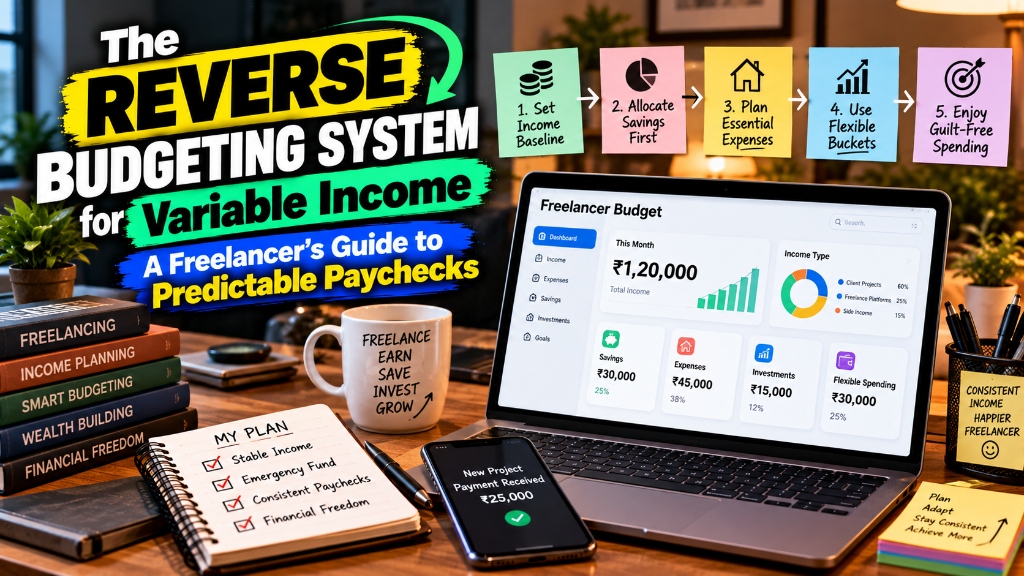
The Reverse Budgeting System for Variable Income: A Freelancer's Guide
Master reverse budgeting for variable income. Learn how freelancers turn erratic client checks into predictable bi-weekly paychecks with buffer accounts.