

Debt Snowball vs. Avalanche in a High-Interest Era: The Hybrid Method
Compare debt snowball vs avalanche in high-interest rate environments. Discover the hybrid Cash-Flow Firefighter method to eliminate 25%+ APR card debt fast.

Educational Resource: This guide does not constitute financial or legal counsel.
In a high-interest rate climate where average credit card APRs hover between 24% and 28%, the hybrid debt payoff method beats traditional snowball and avalanche strategies. By knocking out one micro-balance first to secure immediate behavioral momentum and free up monthly cash flow, then immediately attacking the highest APR balances, you halt severe interest compounding while staying motivated.
Carrying consumer debt has become significantly more dangerous over the past three years.
With benchmark interest rates remaining elevated, average commercial credit card annual percentage rates (APRs) have climbed to historic highs of 24% to 29%. At these punitive rates, revolving debt behaves less like a predictable personal loan and more like an active financial emergency. A $15,000 credit card balance compounding at 26% APR generates over $325 per month in pure interest charges alone, meaning minimum monthly payments barely touch the underlying principal.
For decades, personal finance advisors have engaged in an ideological war: the Debt Snowball (paying smallest balances first for psychological wins) versus the Debt Avalanche (paying highest interest rates first to minimize mathematical costs).
In a low-interest era where loans sat at 6% to 9%, debating psychological comfort versus mathematical precision was a minor luxury. But when APRs breach 25%, the wrong debt strategy can cost you thousands of dollars in wasted interest and add years to your repayment sentence.
Here is why both classic dogmas fall short today, and how the Hybrid Cash-Flow Firefighter Method optimizes both behavioral psychology and cold mathematical survival.
The Classical Breakdown: Behavioral Snowball vs. Mathematical Avalanche
Understanding why traditional strategies clash requires examining the competing mechanics of the debt snowball and the debt avalanche.
Both frameworks require listing all non-mortgage liabilities, paying minimum payments on every debt except one target account, and throwing every available spare dollar of cash flow toward that single priority balance. The disagreement is purely about sequencing.
| Debt Strategy | Prioritization Rule | Core Advantage | Best Suited For |
|---|---|---|---|
| Debt Snowball | Smallest dollar balance first | Fast psychological momentum and quick emotional wins | Borrowers motivated by visible progress |
| Debt Avalanche | Highest interest rate (APR) first | Minimizes total cumulative interest paid to lenders | Mathematically minded, disciplined borrowers |
The Snowball Philosophy
Popularized by radio host Dave Ramsey, the debt snowball focuses entirely on human behavior. You list debts strictly by balance size: a $600 medical bill, then a $2,200 store credit card, then an $8,500 auto loan, ignoring interest rates. Knocking out that first $600 account in 30 days gives you a powerful hit of dopamine, proving that becoming debt-free is physically possible.
The Avalanche Philosophy
Favored by economists and analytical planners, the debt avalanche ranks debts purely by annual percentage rate (APR): a 27.9% retail store card first, followed by a 22.4% airline card, followed by a 9.2% private personal loan. Mathematically, eliminating the most expensive interest drain first saves the most money and achieves full debt freedom in the fewest total months.
Why High-Interest Rates Break the Pure Snowball Strategy
The classic debt snowball breaks down when low-balance debts have low interest rates while massive balances carry predatory 26%+ APRs.
Consider a realistic modern household carrying four consumer liabilities:
| Debt Account | Balance | APR | Minimum Monthly Payment |
|---|---|---|---|
| Debt A: Medical Copay | $800 | 0.0% | $40/mo |
| Debt B: Private Student Loan | $3,500 | 5.5% | $75/mo |
| Debt C: High-APR Credit Card | $14,000 | 27.99% | $420/mo |
| Debt D: Personal Unsecured Loan | $8,000 | 11.0% | $190/mo |
(Sample portfolio with $400/month in extra debt-payoff cash).
Under the pure Debt Snowball, this borrower spends five to six months paying off Debt A ($800 at 0%) and then ten to twelve months grinding through Debt B ($3,500 at 5.5%).
During those 18 months, what is happening to Debt C ($14,000 at 27.99%)? Because only minimum payments were made, over $6,200 in compound interest accumulates on that single credit card balance. The borrower achieved two emotional checkmarks on low-interest debts while their high-interest balance quietly exploded behind the scenes.
| Strategy Method | Total Interest Paid | Months to Full Debt Freedom | Psychological Experience | Mathematical Efficiency |
|---|---|---|---|---|
| Pure Debt Snowball | $11,840 | 44 Months | High early motivation; severe discouragement later as high-APR balances linger | Poor in 25%+ APR climates |
| Pure Debt Avalanche | $7,420 | 36 Months | Difficult start; 18 months of grinding before seeing a single account hit zero | Optimal mathematical speed |
| The Hybrid Firefighter | $7,810 | 37 Months | Fast early victory in Month 2; rapid containment of high APR bleeding | Superior real-world completion rate |
The pure avalanche is mathematically superior, but asking an overwhelmed borrower to throw extra money at a $14,000 balance for two years without ever closing a single account causes high psychological abandonment rates.
The Hybrid Protocol: Triage by Interest Burden and Minimum Payment Ratios
The Hybrid Cash-Flow Firefighter Method merges psychological momentum with mathematical damage control through a structured three-phase sequence.
| Payoff Phase | Focus Criteria | Action Blueprint |
|---|---|---|
| Phase 1: Quick-Win Snuffer (Months 1–2) | Micro-balances under $1,000 | Wipe out one small debt to eliminate a monthly minimum bill and secure instant habit momentum. |
| Phase 2: Red Zone Containment (20%+ APR) | Toxic high-interest debt | Attack all accounts with interest above 20% strictly by highest APR first to halt wealth erosion. |
| Phase 3: Yellow Zone Mop-Up (Under 15% APR) | Low-rate remaining debt | Clear remaining student loans, auto loans, or zero-interest balances using snowball or avalanche. |
Phase 1: The “Quick Win” Snuffer
Identify the single smallest non-zero debt that can be eliminated entirely within 30 to 60 days. Pay it off immediately.
This accomplishes two critical goals: it gives you the cognitive boost of closing an account, and it permanently frees up that account’s minimum monthly payment, increasing your monthly cash flow firepower for the next target.
Phase 2: Red Zone Triage (Any APR Above 20.0%)
Once that initial micro-win is secured, immediately suspend the snowball and enter the Red Zone. Rank all remaining debts that carry an APR of 20.0% or higher strictly by interest rate.
At 20%+ interest, compound interest functions as an active financial fire. Every dollar of extra cash flow (plus the freed-up minimum payments from Phase 1) is directed exclusively at the highest APR card until all 20%+ debts reach zero.
Phase 3: Yellow Zone Consolidation
With all high-interest toxic balances eliminated, your remaining liabilities (typically auto loans, student debt, or medical payment plans under 10% APR) no longer pose existential compound interest threats. You can finish paying them off using the traditional snowball order without suffering punishing interest penalties.
[!TIP] To model your exact repayment dates across snowball, avalanche, and hybrid payoff scenarios, run your debt balances through our Eternity Empire Debt Payoff Calculator.
Strategic Use of 0% APR Balance Transfers Without Hidden Pitfalls
A 0% APR balance transfer credit card can pause interest accumulation for 12 to 21 months, but only if you avoid three critical traps.
Transferring high-rate debt to a 0% introductory card acts like putting an interest fire on ice. If you transfer $10,000 from a 26% card to an 18-month 0% promotion, you save roughly $2,600 in annualized interest charges, allowing 100% of your monthly payments to reduce principal.
However, credit card issuers offer these promotions because the majority of consumers fall into one of three traps:
- The Upfront Transfer Fee: Most cards charge a one-time balance transfer fee of 3% to 5% of the transferred balance. If you transfer $10,000 with a 5% fee, $500 is immediately added to your new balance. Ensure your calculated interest savings vastly exceed this fee.
- The Purchase Contamination Trap: Never use a balance transfer card for new everyday purchases. Payments are often applied to the promotional 0% balance first, leaving new retail purchases to accrue standard 25%+ APR interest immediately.
- The Cliff Penalty: If you fail to pay off the entire balance before the 18-month promotional window expires, the remaining balance immediately begins accruing standard high APR rates.
- Balance to Transfer: $8,000
- Current Card APR: 26.5% (Accruing ~$176/month in interest)
- New Card Offer: 0% APR for 15 Months with a 4% Fee ($320 fee)
- Payoff Payback: In 2 months on your old card, you would pay $352 in interest. The $320 transfer fee pays for itself in less than 60 days.
- Total Outcome: Over $2,300 in net interest avoided over 15 months.
If you secure a 0% balance transfer, divide the total balance (including the fee) by the number of promotional months minus one (e.g., divide by 14 instead of 15). Set up an automated monthly payment for that exact figure to ensure the card hits $0.00 a full month before the promotional window closes.
Negotiating Retention APR Reductions Directly with Issuers
You do not need to wait for a balance transfer offer to lower your interest rate; card issuers frequently grant rate reductions over the phone.
Credit card companies spend $250 to $500 in marketing costs to acquire a single cardholder. If you have made on-time payments for at least 12 consecutive months, retention departments have discretionary authority to lower your APR by 3% to 7% upon request.
Call the customer service number on the back of your card and read this exact negotiation script:
“Hello, my name is [Your Name]. I am reviewing my monthly finances and noticed my current APR on this account is 27.49%.
I have been a consistent customer for [X] years and have made every payment on time. However, I have received multiple pre-approved balance transfer offers from competing banks offering 0% APR for 15 months.
I would prefer to keep my business with your bank rather than transferring my balance. What promotional APR reduction or temporary hardship rate can you apply to my account today to help me lower this interest rate?”
If the first customer service representative claims they have no authority to adjust rates, ask politely: “I understand. Could you please transfer me to your Account Retention or Account Specialist department?”
Internal banking data shows that over 40% of cardholders who ask for a rate reduction receive one. Dropping your APR from 27% to 19% saves hundreds of dollars while you execute your payoff plan.
The 4-Step Action Checklist to Launch Your Debt Exit Today
Escaping high-interest debt requires shifting from passive worry into systematic execution.
- Gather Every Statement: Log into every debt portal and write down three numbers: current balance, APR, and minimum monthly payment.
- Identify Your Quick Win: Select one account with a balance under $1,000 to eliminate first for instant psychological momentum.
- Tag the Red Zone: Group every debt with an APR above 20.0% and arrange them strictly by interest rate.
- Automate Minimums and Direct Surplus: Put minimum payments on auto-pay across every single account, and route your monthly extra cash flow exclusively to your designated target balance.
To see your exact debt-free date and test both snowball and avalanche acceleration schedules, use our interactive Debt Payoff Calculator. If you are dealing specifically with high revolving bank card interest in India, model your minimum vs accelerated payments on our dedicated Credit Card Payoff India Calculator.
Frequently Asked Questions
What APR is considered “toxic” high-interest debt?
Any non-mortgage consumer debt with an annual percentage rate exceeding 15% to 18% is considered high-interest debt. When APRs cross 20%, compound interest outpaces typical wage growth and stock market compounding, requiring immediate triage.
Should I stop investing in my 401(k) while paying off high-interest debt?
Always contribute enough to capture your full employer 401(k) match, as an employer match provides an immediate 50% to 100% guaranteed return. However, pause voluntary retirement contributions beyond the match until all revolving debts carrying APRs above 18% are completely paid off.
Is taking out a debt consolidation personal loan a good idea?
A debt consolidation loan is beneficial only if it significantly lowers your effective interest rate (e.g., dropping a 27% credit card rate to an 11% fixed personal loan) and you address the underlying behavioral spending triggers. If you consolidate debt without closing or cutting up the cards, you risk running up new balances on the newly cleared credit lines.
What should I do if my minimum payments exceed my monthly income?
If minimum obligations exceed total monthly net income, you are facing a structural insolvency crisis. Contact a reputable non-profit credit counseling agency (such as the National Foundation for Credit Counseling) to explore a Debt Management Plan (DMP), which negotiates interest rates down to 6% to 9% without bankruptcy.
Extinguish the Fire and Reclaim Your Future
High-interest revolving debt is designed to feel permanent. Minimum payment algorithms are mathematically calibrated by banks to keep you paying interest for decades while barely lowering the principal balance.
By rejecting pure dogmatic systems and deploying the Hybrid Cash-Flow Firefighter Method, you combine the motivational spark of early psychological wins with the ruthless efficiency of high-APR mathematical triage. You stop the compound interest bleeding, free up monthly cash flow, and build permanent financial momentum.
Gather your statements tonight, isolate your first quick-win target, and take your first step toward debt freedom.
Download: The 2026 Wealth Compounding & FIRE Planning Toolkit
Our complete spreadsheet model and 28-page strategic handbook covering asset allocation buckets, Indian inflation adjustments, and long-term SIP compounding.
- Interactive FIRE & Net Worth Excel/Sheets model
- Asset allocation & emergency reserve matrix
This article and its associated calculators are for educational and informational purposes only and do not constitute financial, investment, legal, tax, or medical advice. We may earn an affiliate commission on third-party links at zero cost to you. Always consult a licensed professional before making major financial, health, or investment decisions. Read our full Legal & Financial Disclaimer.
Aditya Singhania
Verified AuthorAditya writes about investing, saving habits, and smart money management. With a background in financial planning, he helps readers build simple, reliable wealth habits for the long run.
Was this essay valuable to you?
Help us refine our editorial focus and research priorities.
Reader Discussion (2)
Extremely well-articulated analysis on capital compounding. The breakdown on equity allocation vs active income is spot on.
The distinction between looking rich and building real moats is something more founders need to study deeply.
Explore Eternity Empire
Search empirical insights, explore our four wisdom categories, and discover curated strategic essays.
Search Insights
Recent Essays
The Backyard Cash Flow Engine: How to House Hack with an ADU in 2026
11 min read • Oct 20How to Become a Fractional COO: Landing Your First $5,000/Month Retainer Client
12 min read • Oct 20The Zero-Bounce Outbound Engine: How to Set Up Multi-Domain Cold Email with Instantly and Clay
12 min read • Oct 20Featured Guides
Further Wisdom & Insights
Explore All Articles
How to Use ChatGPT & Claude for Personal Finance: 15 Copy-Paste Prompts
Master personal finance using ChatGPT and Claude. Discover 15 ready-to-run prompts for expense audits, zero-based budgeting, and net worth forecasting.
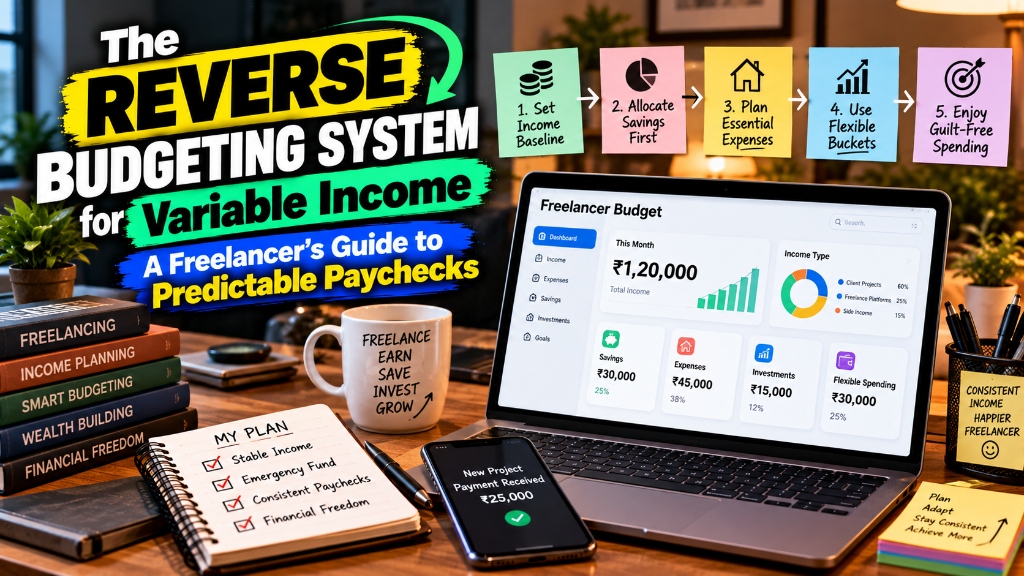
The Reverse Budgeting System for Variable Income: A Freelancer's Guide
Master reverse budgeting for variable income. Learn how freelancers turn erratic client checks into predictable bi-weekly paychecks with buffer accounts.
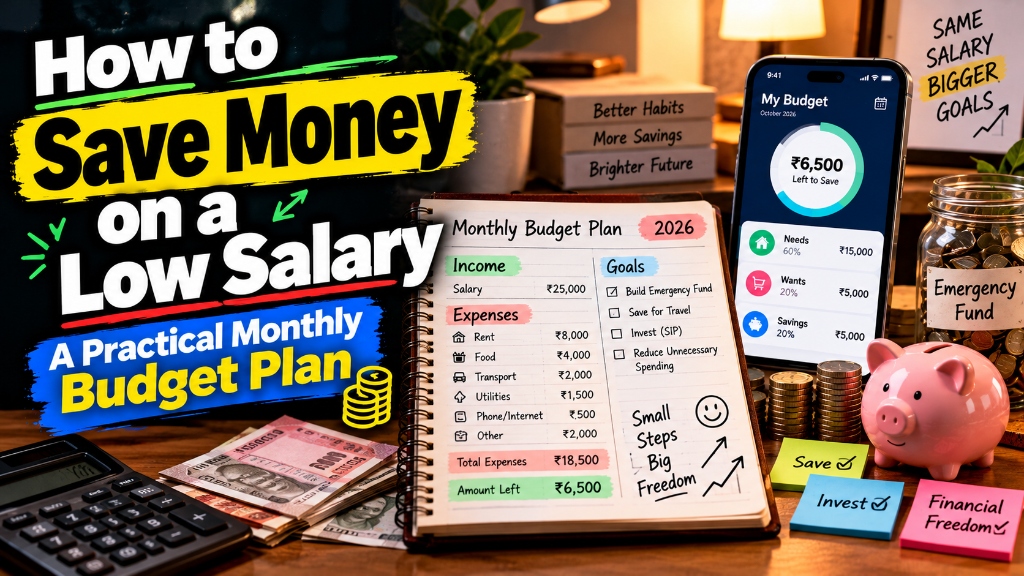
How to Save Money on a Low Salary: A Practical Monthly Budget Plan
Learn how to save money on a low salary with a realistic monthly budget plan. Includes sample budget templates, expense reduction tactics, and savings automation.