

Niche Newsletter Monetization Strategy: Build a $3k/Month Media Asset
Master niche newsletter monetization. Learn how 3,000 engaged B2B subscribers generate $3,000 monthly through native sponsorships, curation, and job boards.
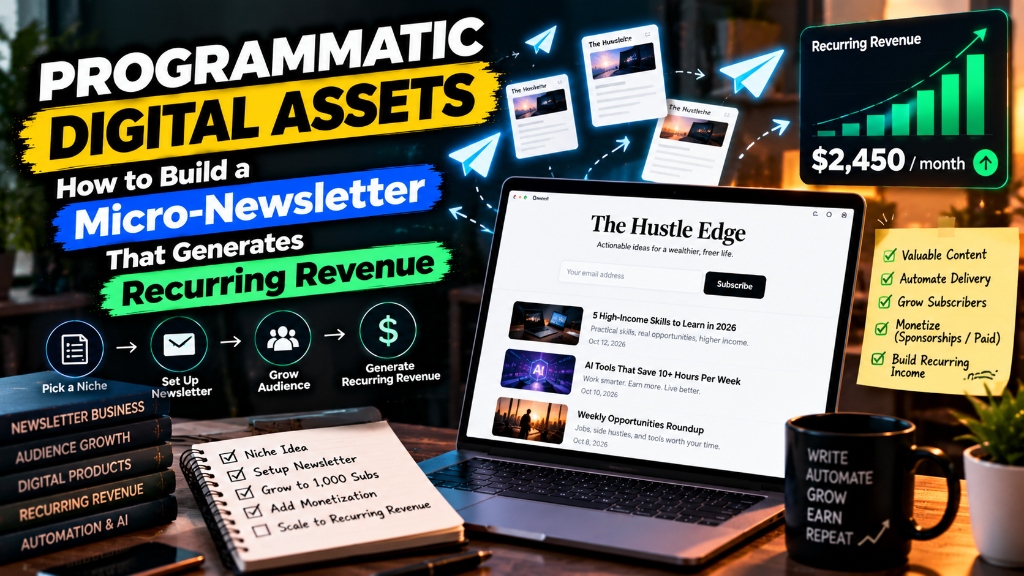
Educational Resource: This guide does not constitute financial or legal counsel.
A niche newsletter monetization strategy generates predictable recurring revenue by delivering curated, high-utility industry intelligence to a tightly focused audience of decision-makers. Rather than chasing massive consumer subscriber counts with low ad rates, a hyper-targeted list of 3,000 to 5,000 B2B professionals commands premium $60 to $100 CPM sponsorships, paid classified job placements, and high-margin digital reports.
The conventional playbook for building an online media audience focuses entirely on chasing viral vanity metrics.
Aspiring creators spend years trying to amass 100,000 followers on social video platforms, only to discover that broad, unsegmented consumer audiences generate dismal advertising revenues. A viral general entertainment account might earn $2 to $4 per thousand views through programmatic creator funds, requiring millions of impressions every month just to cover basic living expenses.
The modern media opportunity belongs to micro-newsletters operating in tightly targeted commercial niches.
When you control direct inbox access to 3,000 procurement directors in clinical diagnostics, 4,000 real estate developers in Texas, or 2,500 legal tech operations managers, you own a specialized distribution asset. Corporate software vendors, industry event organizers, and recruitment firms will gladly pay $300 to $600 per issue to place native sponsorships directly before those verified buyers.
Here is the blueprint for launching, curating, and monetizing a niche newsletter from zero subscribers to $3,000 in monthly recurring revenue.
The Economics of Micro-Newsletters: Why 3,000 Niche Subscribers Beat 50,000 General Fans
Micro-newsletters generate superior revenues because B2B advertiser return on investment is driven by audience purchasing authority rather than gross subscriber volume.
In advertising economics, rates are determined by Cost Per Mille (CPM), representing the cost an advertiser pays for 1,000 impressions or subscribers. The CPM differences across audiences reflect the lifetime value of the products being sold:
| Newsletter Category | Typical Audience Profile | Standard CPM Range | Revenue per Issue (3k - 5k Opens) |
|---|---|---|---|
| General Pop Culture / Meme | Broad consumer, non-commercial, mixed demographics | $5 to $15 per 1,000 opens | $25 to $75 per issue |
| Specialized B2B Vertical | VP/Director level, enterprise budget decision-makers | $60 to $120 per 1,000 opens | $180 to $600 per issue |
A newsletter with 3,000 engaged B2B subscribers publishing twice weekly at an $80 CPM earns $480 per week (roughly $1,920 per month) from primary sponsorships alone. When you add secondary ad placements, job board listings, and digital toolkit upsells, monthly revenue easily exceeds $3,000.
| Newsletter Type | Subscriber Size | Open Rate (%) | Typical CPM | Monthly Publishing Cadence | Estimated Monthly Ad Revenue |
|---|---|---|---|---|---|
| Broad Personal Growth | 50,000 | 25% (12,500 opens) | $18.00 | 4 issues/mo (Weekly) | $900 / month |
| Local Commercial Real Estate | 3,500 | 52% (1,820 opens) | $85.00 | 8 issues/mo (Twice weekly) | $1,237 / month |
| B2B SaaS Sales Ops Digest | 4,500 | 48% (2,160 opens) | $95.00 | 8 issues/mo (Twice weekly) | $1,641 / month |
| Legal Compliance Briefing | 2,800 | 55% (1,540 opens) | $110.00 | 4 issues/mo (Weekly) | $677 / month |
Hyper-specific industry briefs command premium rates because every reader is a verified business professional who manages enterprise vendor budgets.
Identifying High-Value B2B Niches with Active Commercial Advertisers
Selecting a profitable newsletter niche requires confirming that commercial software vendors and service providers are already spending money to acquire customers in that market.
Avoid niches where the audience is cash-poor or where transactions are purely recreational. The ideal B2B vertical satisfies three criteria:
- High Contract Values (ACV): The enterprise software, consulting, or equipment sold in the sector costs at least $5,000 to $50,000 annually. When a single customer is worth $20,000, an enterprise sponsor can easily justify paying $1,000 for a sponsored issue if it generates just two qualified sales demo calls.
- Regulatory or Technological Change: Niches undergoing continuous regulatory compliance updates (such as AI healthcare compliance, green building mandates, or maritime shipping logistics) create urgent demand for timely, digestible news.
- Fragmented Information Sources: If the news in the industry is scattered across twenty obscure trade blogs, government filings, and regional portals, your curated summary saves busy executives hours of reading time every week.
High-Margin B2B Niche Opportunities
- AI Ops & Cloud Infrastructure: Best practices, cost optimization tricks, and security alerts for DevOps leads.
- Supply Chain & Cold Storage Logistics: Freight index trends, port congestion updates, and warehouse robotics.
- Municipal Water & Infrastructure Engineering: Federal grants, civil contracting notices, and wastewater tech.
- Dental Practice Equity & M&A: Practice consolidation trends, valuation multiples, and dental equipment leasing.
The Curation Engine: Aggregating Industry News with RSS and Automation
You do not need to write 3,000-word original journalistic essays to publish an indispensable, high-value newsletter.
The most successful niche publications operate as intelligent curation engines. Executive readers are overwhelmed with information; they do not want more long essays. They want a reliable curator who filters through the daily noise, extracts the five most important developments, and explains what each item means in two sentences.
You can automate 80% of your information gathering using modern aggregation tools:
| Production Stage | Operating Mechanism | Supporting Infrastructure |
|---|---|---|
| 1. Ingestion Sources | Curates raw industry news, RSS feeds, and regulatory filings | Feedly, Inoreader, SEC EDGAR |
| 2. Automated Filtering | Removes duplicate articles and filters targeted keywords | Make.com or Zapier webhooks |
| 3. AI Draft Synthesis | Summarizes data points into structured bullet briefs | Claude 3.5 Sonnet / Custom Prompt |
| 4. Human Editorial Polish | Adds sharp strategic commentary and formats ad blocks | Beehiiv / Kit Editor |
The 4-Part “Insight Bullet” Writing Formula
For each curated story in your newsletter, follow this structured format:
- The Headline: A bold, descriptive fact (e.g., “Federal regulators mandate new cyber reporting rules for regional logistics hubs.”)
- What Happened: A 30-word factual summary of the core development.
- Why It Matters: One sentence explaining the direct operational or financial consequence for your readers.
- Source Link: A clean, hyperlinked attribution to the original reporting.
This format allows you to compile an authoritative, professional edition in under 45 minutes of active editing time.
Organic Subscriber Acquisition Tactics (Co-Registrations, Lead Magnets)
Growing a high-value B2B subscriber base requires targeted, professional acquisition channels rather than broad social media giveaways.
Giving away free iPads or gift cards attracts low-quality consumer leads who will never open your emails, ruining your sender reputation. To attract verified industry operators, deploy these three focused acquisition levers:
1. The Tactical B2B Lead Magnet
Create a one-page, highly practical resource that solves an immediate workflow problem in your niche. Examples include:
- “The 2026 Enterprise SaaS Renewal Negotiation Checklist”
- “The Directory of 75 Active Seed-Stage BioTech Investors”
- “The 1-Page Fleet Compliance Audit Matrix”
Promote this resource on LinkedIn and industry forums. Require an email address to download the PDF, automatically opting them into your weekly briefing.
2. Platform Recommendation Networks (Beehiiv / SparkLoop)
Modern newsletter platforms like Beehiiv and ConvertKit (Kit) feature built-in recommendation networks. When a new user signs up for an adjacent newsletter in your industry (such as a marketing ops publication), the platform suggests your newsletter as a recommended follow-up. High-converting co-registration partnerships can drive 200 to 500 organic, pre-validated subscribers each month with zero ad spend.
3. Thoughtful LinkedIn Native Snippets
Repurpose your top two newsletter bullets into standalone text posts on LinkedIn on Tuesday and Thursday mornings. End each post with a clear, non-pushy link: “I break down the financial impact of these regulatory shifts every Thursday morning for 2,400 logistics operators. Link in comments to join the briefing.”
[!TIP] If you are building digital resources or micro-courses as back-end monetization for your readership, check out our guide on the best digital products to sell online to evaluate high-converting product formats.
The Revenue Engine: Native Sponsorships, Paid Job Boards, and Digital Guides
Monetizing a micro-newsletter successfully requires diversifying revenue across three complementary income streams.
| Revenue Stream | Monetization Mechanics | Realistic Monthly Yield |
|---|---|---|
| Primary & Secondary Sponsorships | Native sponsor slots ($300 to $600 per issue across 8 issues) | ~$2,400 / month |
| Featured B2B Job Board | Talent classifieds ($150 per 30-day listing across 3 listings) | ~$450 / month |
| Niche Industry Benchmark Reports | Digital guides and playbooks ($97 to $197 purchase across 4 sales) | ~$500 / month |
1. Direct Native Sponsorships
Native sponsorships blend naturally into your newsletter’s formatting. A standard primary sponsorship includes a 150-word overview of the sponsor’s solution, a custom call-to-action button, and a company logo placed right after your opening editorial hook.
Reach out directly to marketing managers at mid-sized SaaS platforms who are already sponsoring industry podcasts or running LinkedIn ads in your vertical.
2. Industry Job Board / Talent Classifieds
Hiring specialized talent is the most expensive problem in modern business. Staffing agencies charge $15,000 to $25,000 to place a senior compliance officer or software architect. Charging an employer $150 to $250 to feature their open role in your Friday edition delivers targeted applicant flow at a fraction of recruiting fees.
3. Digital Asset and Benchmark Reports
Survey your subscriber base annually on salary compensation, software budgets, or tech stack adoption. Package the aggregated findings into a polished 25-page “Industry Benchmark Report” and sell it for $197 to corporate teams and research consultants.
Realistic Financial Model: Timelines from Launch to $2,500 Monthly Recurring Revenue
Building a profitable digital media asset takes consistency, but the timeline to meaningful cash flow is remarkably short compared to building physical businesses.
| Phase | Milestone Timeline | Subscriber Count | Primary Activities | Monthly Revenue |
|---|---|---|---|---|
| Phase 1: Launch & Validation | Months 1 to 2 | 0 to 500 | Establish RSS curation stack; publish consistently; build lead magnet | $0 |
| Phase 2: Network Growth | Months 3 to 4 | 500 to 1,500 | Activate Beehiiv recommendations; launch organic LinkedIn snippets | $200 (Beehiiv ad network tests) |
| Phase 3: Direct Ad Outreach | Months 5 to 6 | 1,500 to 3,000 | Direct pitch outreach to 20 industry vendors; offer beta ad packages | $1,200 (2 paid sponsors/mo) |
| Phase 4: Full Multi-Stream Scale | Months 7 to 9 | 3,000 to 5,000 | Sold-out sponsorship calendar; integrated job classifieds; annual report | $2,800 to $3,500 / month |
At 3,500 subscribers with a 50% open rate (1,750 verified readers per send), you publish eight times a month. Selling the primary ad slot for $250 per issue generates $2,000. Adding two $200 job board listings and occasional affiliate software recommendations pushes your asset past the $3,000 monthly mark.
Because email software costs under $100 per month and requires zero physical inventory, your net profit margin exceeds 90%.
Frequently Asked Questions
Can I build a profitable newsletter using free tools?
You can launch on free tiers of platforms like Beehiiv, Substack, or MailerLite up to your first 1,000 to 2,500 subscribers. Once you begin actively selling sponsorships and using custom custom domain branding, upgrading to a $39 to $99 per month plan unlocks essential tools like custom ad tracking, referral programs, and multiple webhooks.
What is the difference between Beehiiv and Substack for monetized newsletters?
Substack is optimized primarily for consumer culture, political commentary, and reader-supported paid subscriptions (paywalls). Beehiiv is built from the ground up for commercial newsletters that monetize through advertising, featuring built-in ad networks, sponsor tracking pixels, automated referral engines, and advanced audience segmentation.
How much time does it take to maintain a curated newsletter each week?
A twice-weekly curated niche newsletter typically requires three to five hours per week. This includes 90 minutes of reviewing automated RSS feeds, 60 minutes of writing and editing summaries, and 30 minutes of scheduling sponsor creative and managing links.
What if I don’t consider myself a professional industry expert?
You do not need to be the world’s foremost expert; you simply need to be a disciplined, curious aggregator. Presenting yourself as an industry researcher who curates and organizes the most vital news on behalf of your peers is an honest, compelling, and authoritative posture that readers deeply appreciate.
Own Your Media Distribution
In a digital landscape dominated by capricious social media algorithms and rising advertising costs, owning a direct, permission-based line of communication with thousands of commercial decision-makers is one of the highest-leverage digital assets you can build.
A micro-newsletter gives you financial autonomy, high margins, and portable audience equity that algorithms cannot take away overnight. By focusing on a specialized B2B vertical, delivering consistent curated value, and packaging professional sponsorships, you create a semi-passive media business that compounds in value month after month.
Choose your industry niche today, set up your landing page on Beehiiv, and publish your first briefing this week.
Download: The Solo Founder's High-Margin Scaling Playbook
A battle-tested blueprint on building asymmetric leverage, packaging high-ticket B2B services, and converting labor into scalable digital products.
- Pricing power & contract negotiation scripts
- Micro-SaaS & digital product launch checklist
This article and its associated calculators are for educational and informational purposes only and do not constitute financial, investment, legal, tax, or medical advice. We may earn an affiliate commission on third-party links at zero cost to you. Always consult a licensed professional before making major financial, health, or investment decisions. Read our full Legal & Financial Disclaimer.
Vikram Nair
Verified AuthorVikram covers small business ideas, digital ventures, and practical company growth. Having worked alongside early-stage founders, he writes straightforward advice on building profitable businesses.
Was this essay valuable to you?
Help us refine our editorial focus and research priorities.
Reader Discussion (2)
Extremely well-articulated analysis on capital compounding. The breakdown on equity allocation vs active income is spot on.
The distinction between looking rich and building real moats is something more founders need to study deeply.
Explore Eternity Empire
Search empirical insights, explore our four wisdom categories, and discover curated strategic essays.
Search Insights
Recent Essays
The Backyard Cash Flow Engine: How to House Hack with an ADU in 2026
11 min read • Oct 20How to Become a Fractional COO: Landing Your First $5,000/Month Retainer Client
12 min read • Oct 20The Zero-Bounce Outbound Engine: How to Set Up Multi-Domain Cold Email with Instantly and Clay
12 min read • Oct 20Featured Guides
Further Wisdom & Insights
Explore All Articles
How to Build and Sell Niche Notion Templates: From Zero to $2,000/Month in Digital Product Sales
Master selling notion templates for passive income. Discover profitable B2B niches, database architecture, Gumroad funnels, and organic viral distribution.

Best Digital Products to Sell Online in 2026: Ideas, Tools and Startup Costs
Discover the best digital products to sell online in 2026. Compare startup costs, profit margins, creation tools, and platform fees for digital downloads.

Best Side Hustles to Make Money Online in 2026: 15 Realistic Ideas
Discover the 15 best side hustles to make money online in 2026. Compare startup costs, required skills, earning potential, and time to first income.