

Why Every Entrepreneur Needs a Clear Business Model
Great ideas without clear unit economics are hobbies. Here is how to construct a resilient, high-margin business model.
Disclaimer: This article is for educational purposes only and does not constitute financial or legal advice. We may earn an affiliate commission on links at no cost to you.
Read full disclaimer ↓Listen to "Why Every Entrepreneur Needs a Clear Business Model"
Natural Voice Synthesis • Hands-free listening
A clear business model is an economic architecture that defines how an enterprise creates, delivers, and captures financial value. Without positive unit economics where Customer Lifetime Value (LTV) substantially exceeds Customer Acquisition Cost (CAC), even innovative product ideas quickly fail due to cash exhaustion.
Great product ideas without clear unit economics are expensive hobbies. A resilient business model systematically aligns customer problem resolution, affordable acquisition distribution, high gross margins, and recurring retention. Target an LTV to CAC ratio greater than 3.0x and maintain gross margins above 70% to ensure sustainable enterprise scaling.
The myth of Product-Only Success
Thousands of early-stage startups fail annually not from a lack of passionate effort or product utility, but from economic misconfiguration. Founders frequently assume that building an attractive product will automatically attract profitable demand.
A product is what you deliver to a customer; a business model is how you capture sustainable value from delivering that product. If acquisition costs exceed lifetime customer revenue, scaling operations simply accelerates bankruptcy.
The 4 Essential Pillars of Business Architecture
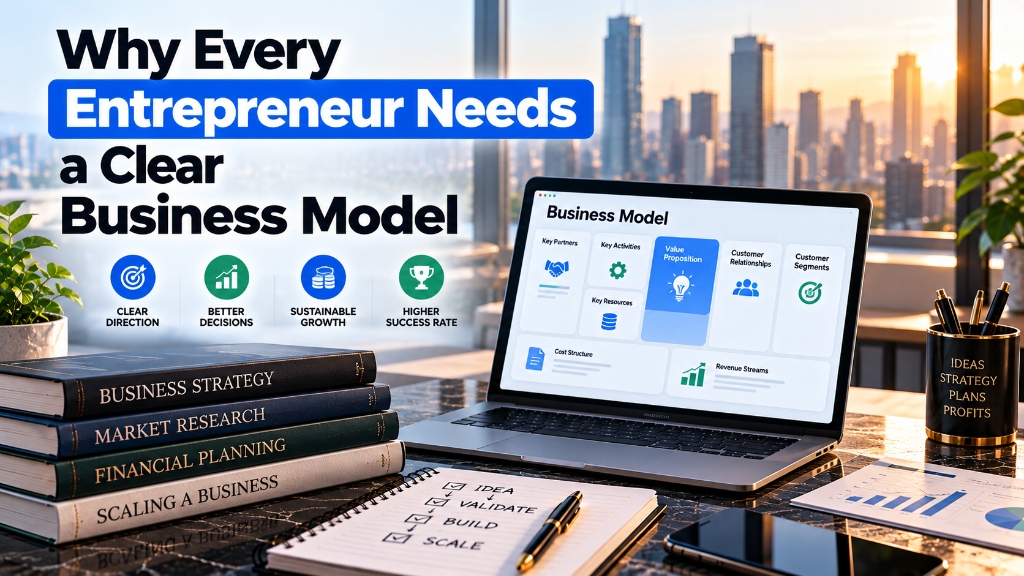
Every durable business model resolves four core operational questions clearly:
- Value Proposition: What acute, urgent pain point do you solve for a specific audience?
- Distribution Engine: How do you acquire qualified customers predictably and affordably?
- Unit Economics: what’s your net profit margin after fulfilling one single unit of sale?
- Retention Engine: Why do customers return, renew subscriptions, or expand contract value over time?
LTV / CAC Ratio > 3.0x  ==> Scalable Cash-Flow Engine
LTV / CAC Ratio < 1.0x  ==> Unprofitable Capital Burn (Destined for failure)
Compete on superior gross margins, brand authority, and distribution efficiency rather than price discounting.
High-Margin vs. Low-Margin Strategic Warfare
In commercial enterprise, gross margins grant strategic optionality. A business operating on 15% gross margins requires immense volume to survive minor unexpected supply chain shocks or advertising cost spikes.
Conversely, a high-margin enterprise (75%+ gross margins, typical of software, digital media, or premium services) generates solid cash reserves. High gross margins allow companies to reinvest aggressively in top talent, advanced research, and aggressive customer acquisition channels that low-margin competitors can’t afford.
Practical example: Modern Unit Economics Breakdown
Consider two software-as-a-service (SaaS) companies targeting enterprise clients:
- Company A (Unhealthy Model): Spends $4,000 in advertising and sales commissions to acquire one customer (CAC). The customer pays $100 per month and churns after 12 months (LTV = $1,200). LTV/CAC ratio is 0.3x. Company A burns capital rapidly on every new sale.
- Company B (Healthy Model): Spends $1,500 in targeted content outreach to acquire one customer. The customer pays $300 per month and stays for 36 months with cross-sell additions (LTV = $10,800). LTV/CAC ratio is 7.2x. Company B generates abundant positive cash flow to fund continuous expansion.
Comparison: Primary Business Model Archetypes
| Business Model | Best For | Gross Margins | Scalability | Key Operational Risk |
|---|---|---|---|---|
| Recurring SaaS | Software solutions | Very High (75-85%) | Extreme (Near zero marginal cost) | Churn rates & high initial dev cost |
| Productized Service | Specialized B2B work | High (50-70%) | High (Standardized delivery) | Key-person dependency |
| Direct Consumer E-Commerce | Physical products | Moderate (30-50%) | Moderate (Inventory bound) | Supply chain & rising ad CAC |
| Marketplace Platform | Buyer/Seller matching | High (60-80%) | Extreme (Network effects) | Cold-start liquidity problem |
Three vital tests for Your Business Model
Validate your business model strength by subjecting it to these three diagnostic tests:
- The Repeatability Test: Can you double customer acquisition next month by doubling input without proportional labor friction?
- The Pricing Power Test: Can you increase prices by 15% tomorrow without losing more than 5% of your existing customer base?
- The Cash Conversion Test: Does customer payment reach your bank account before or immediately upon value delivery?
Frequently asked questions
what’s a good LTV to CAC ratio for a growing business?
A healthy benchmark LTV to CAC ratio is 3.0x or higher, meaning a customer generates at least three times more net lifetime gross profit than it costs to acquire them.
what’s the difference between gross margin and net margin?
Gross margin represents revenue minus direct cost of goods/services sold (COGS). Net margin represents net profit remaining after deducting all operating expenses, taxes, and interest overhead.
How can an existing business improve its gross margins?
Businesses can improve gross margins by raising prices to reflect superior value, eliminating low-margin product lines, negotiating better vendor rates, or automating manual fulfillment tasks with software.
Strategic recommendation
calculate your current LTV to CAC ratio and gross margin percentages today. If your gross margins fall below 50%, focus immediate efforts on pricing optimization and operational automation.
Download: The Capital Allocation & Wealth Framework PDF
Get our comprehensive 30-page strategic PDF guide covering asset allocation, business moats, and mental models for long-term compounding.
- High-margin enterprise checklist
- Asset allocation proportion matrix
This article and its associated calculators are for educational and informational purposes only and do not constitute financial, investment, legal, tax, or medical advice. We may earn an affiliate commission on third-party links at zero cost to you. Always consult a licensed professional before making major financial, health, or investment decisions. Read our full Legal & Financial Disclaimer.
Written by Eternity Empire Editorial Team
The Eternity Empire editorial team analyzes personal finance, capital allocation, business strategy, and long-term wealth preservation frameworks.
Was this essay valuable to you?
Help us refine our editorial focus and research priorities.
Reader Discussion (2)
Extremely well-articulated analysis on capital compounding. The breakdown on equity allocation vs active income is spot on.
The distinction between looking rich and building real moats is something more founders need to study deeply.
Explore Eternity Empire
Search insights, browse categories, and discover featured publication guides.
Search Insights
Recent Insights
Further Wisdom & Insights
Explore All Articles →
The Operating System for Delegating Key Business Tasks
How entrepreneurs delegate operational tasks effectively using outcome-based accountability, SOP documentation, and async workflows.

The Micro-SaaS Playbook: Building Profitable Niche Software
How solo developers and small teams build, launch, and scale high-margin niche software products to $10k+ recurring monthly revenue.
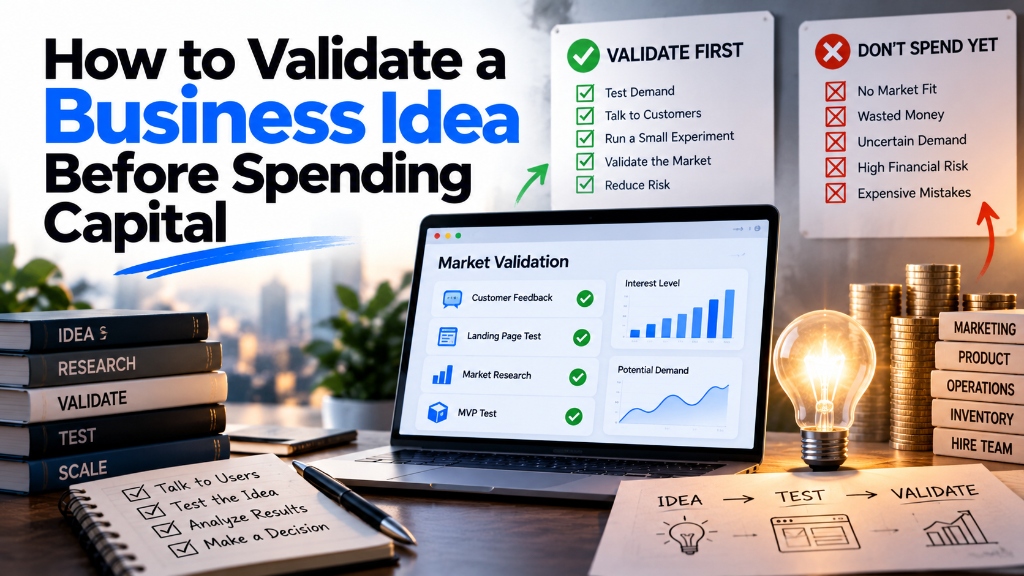
How to Validate a Business Idea Before Spending Capital
A step-by-step validation framework for testing market demand, collecting presales, and confirming buyer willingness to pay.