

AI Money Management Tools: Can AI Help You Budget, Save and Invest Smarter?
Discover the best AI personal finance tools in 2026. Compare AI expense tracking, automated savings, spreadsheet assistants, privacy risks, and real limitations.

Educational Resource: This guide does not constitute financial or legal counsel.
AI money management tools excel at automated transaction categorisation, subscription audits, and financial spreadsheet modeling, but they cannot replace fiduciary judgment. While platforms like Copilot Money, Cleo, and Claude-assisted budget scripts save hours of manual data entry, users must maintain human oversight to prevent hallucinations and protect private banking data.
Artificial intelligence has officially made its way from generative chatbots into personal banking, promising to automate the tedious math of household budgeting.
In 2026, financial applications no longer rely on simple keyword-matching rules to guess whether a purchase was groceries or transportation. Instead, modern AI personal finance tools analyze recurring spending patterns, forecast cash-flow crunches two weeks before rent is due, negotiate cable bills automatically, and build custom financial dashboards inside spreadsheets.
Yet, handing over your financial life to an algorithm comes with real risks: data privacy vulnerabilities, hallucinated tax advice, and overconfident investment suggestions. Here is an honest, non-hyped breakdown of what AI can actually do for your money today, where it falls flat, and how to use it safely.
What Are AI Personal Finance Tools and How Do They Work?
AI personal finance tools are software applications that use machine-learning algorithms and large language models (LLMs) to analyze banking transactions, identify waste, and automate routine financial actions.
Unlike static spreadsheets, these systems process large volumes of raw bank data in seconds. They categorize merchants correctly even when the transaction description is an obscure string of numbers, identify creeping price increases on recurring gym or streaming services, and simulate how a major purchase will affect your savings six months down the line.
The underlying technology combines open-banking APIs like Plaid and Yodlee with natural-language processing models trained on historical consumer spending datasets.
Comprehensive Comparison: The Leading AI Personal Finance Tools in 2026
The table below compares the leading AI money management applications, their primary automation features, monthly pricing, and key limitations.
| Tool Name | Core AI Capability | Pricing (2026) | Bank Connector | Best For | Main Limitation |
|---|---|---|---|---|---|
| Copilot Money | Predictive merchant tagging & subscription anomaly detection | $13/mo or $95/yr | Plaid, MX | Apple ecosystem users wanting zero manual entry | Strictly iOS and macOS; no Android or Windows |
| Cleo | Conversational chat assistant with roast and budget modes | Free tier, or $5.99 to $14.99/mo | Plaid | Gen Z & young professionals wanting behavioral motivation | Financial advice is basic and meme-centric |
| Monarch Money AI | Household spending pattern forecasting & category clustering | $14.99/mo or $99.99/yr | Plaid, Finicity, MX | Couples and families tracking joint accounts | Premium pricing with no free tier |
| Claude & ChatGPT Financial Modeling | Custom spreadsheet analysis, scenario forecasting, formula generation | Free tier, or $20/mo Pro | Manual CSV upload / API scripts | DIY analysts analyzing anonymized transaction exports | Requires manual prompt engineering and verification |
| Magnifi | Natural-language conversational investment discovery | $14/mo or $132/yr | Brokerage account linking | Retail investors researching thematic funds and ETFs | Cannot execute complex options or tax-loss harvesting |
| WallyGPT | Multi-currency open-banking chat analytics | Free basic, $8.99/mo Gold | Global open-banking | International expats and multi-currency earners | Interface takes time to learn and configure |
| PocketGuard AI Assistant | Automated bill negotiation and disposable cash calculation | Free tier, or $12.99/mo | Plaid, Finicity | Preventing accidental overdrafts and high recurring bills | Bill negotiation service takes a cut of savings |
4 Practical Ways AI Genuinely Improves Money Management
When used within realistic boundaries, modern AI personal finance tools eliminate several of the most frustrating friction points in personal accounting.
1. Zero-Friction Transaction Categorisation
AI eliminates the manual chore of categorizing credit card and debit card transactions by learning your unique spending habits over time.
Traditional personal finance apps frequently mislabeled transactions: a purchase at a supermarket gas pump might be tagged as groceries, or a medical clinic visit might be filed under retail shopping. Machine-learning models evaluate the merchant code, transaction history, time of day, and location context to categorize purchases with over 95% accuracy.
If you manually recategorize a specific merchant once, the system remembers that preference permanently across all linked cards.
2. Spotting Subscription Creep and Hidden Price Hikes
AI algorithms monitor recurring monthly and annual charges to identify unwanted subscriptions and sneaky price adjustments.
Many streaming platforms, software tools, and digital utilities quietly raise their prices by one or two dollars a month, counting on consumer inertia. AI assistants track recurring charge intervals, flagging when a regular subscription jumps from $11.99 to $14.99, or alerting you three days before a free trial automatically converts into an annual charge.
Certain platforms, such as Rocket Money and PocketGuard, can even initiate automated cancellation requests or negotiate lower monthly rates directly with service providers on your behalf.
3. Rapid Scenario Analysis and Cash-Flow Forecasting
AI models project your available cash balance over the next thirty to sixty days based on your historical bill cadence and paycheck timing.
Instead of guessing whether you can afford an impromptu weekend getaway, predictive cash-flow engines model all known upcoming obligations: rent, car insurance, loan payments, and groceries. The system provides an instant answer by calculating whether spending that money today will cause your account balance to dip below your safety threshold before your next paycheck arrives.
4. Advanced DIY Spreadsheet Analysis via LLMs
Power users can export raw, anonymized bank CSV files into models like Claude or ChatGPT to identify financial leaks that standard apps overlook.
By uploading a year of transaction history with personal details removed, you can ask prompts such as: “Group my dining expenses by day of the week,” “Calculate my grocery inflation rate from January to December,” or “Write an Excel formula that highlights any month where discretionary spending exceeded 30% of net income.”
This gives you institutional-level financial data analysis without forcing you to write complex Python scripts or nested spreadsheet macros manually.
The Critical Limitations: Why AI Cannot Replace Financial Common Sense
Despite marketing claims by fintech startups, artificial intelligence has distinct vulnerabilities that make full autonomous money management dangerous.
- Hallucinated Tax and Legal Rules: Large language models predict the next plausible word in a sentence; they do not possess a real-time legal brain. Asking an LLM for tax deduction advice or capital gains optimization frequently yields fabricated regulations, outdated income thresholds, or inaccurate deduction rules that could trigger audit penalties.
- Lack of Emotional and Life Context: An algorithm does not understand your career stability, family health vulnerabilities, personal risk tolerance, or moral values. A mathematical model might suggest aggressively paying down a 4% mortgage because investments yield 8%, ignoring the emotional security and peace of mind that comes from being debt-free.
- Overconfidence in Short-Term Market Predictions: No generative AI model can forecast tomorrow’s stock market movements or interest rate decisions. Retail investors who use AI prompts to identify “hot stock picks” are essentially running sophisticated coin flips that often end in severe capital losses.
Privacy, Security, and Data Protection: What You Must Know
Connecting your primary checking and savings accounts to third-party AI services introduces valid data security considerations.
- Verify Read-Only API Integration: Ensure the application connects via verified financial aggregators like Plaid, MX, or RBI-regulated Account Aggregators. Legitimate tools never store your banking username or password, and read-only access prevents the software from initiating fund transfers.
- Never Paste Raw Account Numbers into Public Chatbots: When using general AI chatbots like ChatGPT or Claude for financial analysis, scrub all personal identifiers. Strip your full name, bank name, account numbers, home address, and employer information from the CSV file before uploading.
- Check Data Training Policies: Review whether the application uses your personal financial records to train its foundation models. Reputable paid financial applications explicitly state that consumer transaction data is kept isolated and never sold to third-party advertising networks.
Frequently Asked Questions
Can AI manage my investments automatically?
AI can automate basic portfolio rebalancing and tax-loss harvesting through robo-advisors like Betterment or Wealthfront, but it cannot predict market downturns or formulate a bespoke comprehensive financial plan without human oversight.
Is it safe to link my bank account to an AI budgeting app?
Yes, it is safe as long as the application uses established read-only aggregators like Plaid or Finicity with bank-grade 256-bit AES encryption, which guarantees the app cannot withdraw or transfer your money.
How does Claude or ChatGPT help with personal finance?
Claude and ChatGPT can categorize CSV bank exports, write spreadsheet formulas, draft budget plans, and explain complex financial concepts in simple English, provided you remove personal account numbers first.
What is the biggest danger of using AI for money management?
The biggest danger is algorithmic hallucination, where an AI tool gives plausible-sounding but factually incorrect tax, legal, or investment advice that leads to financial mistakes.
Are free AI personal finance tools worth using?
Free tools like Cleo or the basic tiers of spreadsheet assistants provide helpful starting points, but paid platforms like Copilot Money or Monarch Money offer far stronger data privacy guarantees and customer support.
Strategic Takeaway and Action Plan
Artificial intelligence is an exceptional assistant for organizing financial data, but you must remain the executive decision-maker.
Take advantage of AI where it works best: eliminating hours of manual receipt logging, flagging unnecessary monthly subscriptions, and building custom spending charts. However, never rely on an automated prompt for critical tax filing, debt restructuring, or retirement timelines. Pair modern automated tools with a disciplined, human-driven framework by exploring our guide on how to build a personal financial system.
Download: The 2026 Wealth Compounding & FIRE Planning Toolkit
Our complete spreadsheet model and 28-page strategic handbook covering asset allocation buckets, Indian inflation adjustments, and long-term SIP compounding.
- Interactive FIRE & Net Worth Excel/Sheets model
- Asset allocation & emergency reserve matrix
This article and its associated calculators are for educational and informational purposes only and do not constitute financial, investment, legal, tax, or medical advice. We may earn an affiliate commission on third-party links at zero cost to you. Always consult a licensed professional before making major financial, health, or investment decisions. Read our full Legal & Financial Disclaimer.
Aditya Singhania
Verified AuthorAditya writes about investing, saving habits, and smart money management. With a background in financial planning, he helps readers build simple, reliable wealth habits for the long run.
Was this essay valuable to you?
Help us refine our editorial focus and research priorities.
Reader Discussion (2)
Extremely well-articulated analysis on capital compounding. The breakdown on equity allocation vs active income is spot on.
The distinction between looking rich and building real moats is something more founders need to study deeply.
Explore Eternity Empire
Search empirical insights, explore our four wisdom categories, and discover curated strategic essays.
Search Insights
Recent Essays
The Backyard Cash Flow Engine: How to House Hack with an ADU in 2026
11 min read • Oct 20How to Become a Fractional COO: Landing Your First $5,000/Month Retainer Client
12 min read • Oct 20The Zero-Bounce Outbound Engine: How to Set Up Multi-Domain Cold Email with Instantly and Clay
12 min read • Oct 20Featured Guides
Further Wisdom & Insights
Explore All Articles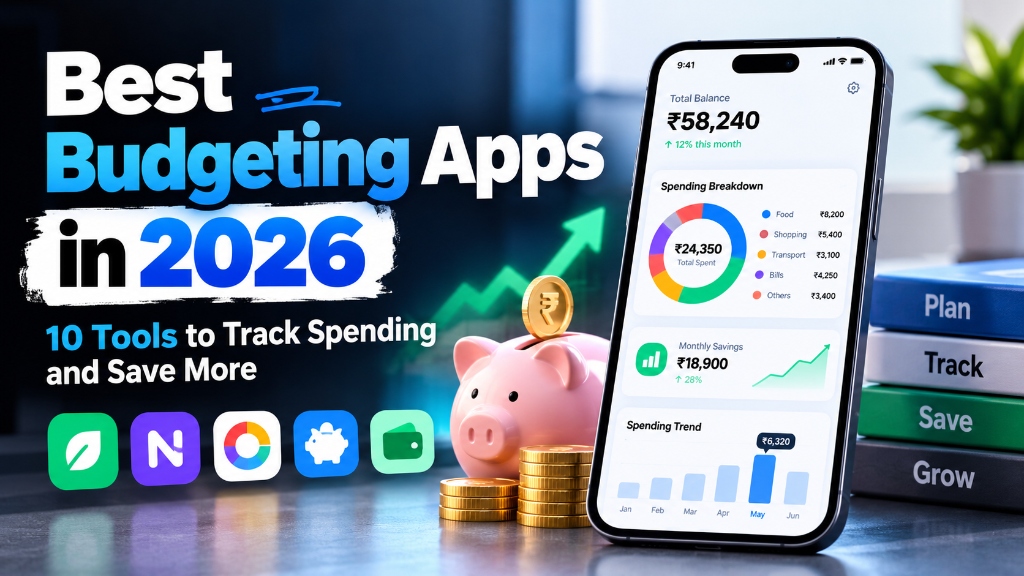
Best Budgeting Apps in 2026: 10 Tools to Track Spending and Save More
Compare the 10 best budgeting apps in 2026. Explore features, pricing, automated tracking, and zero-based budgeting tools to grow your savings.

How to Use ChatGPT & Claude for Personal Finance: 15 Copy-Paste Prompts
Master personal finance using ChatGPT and Claude. Discover 15 ready-to-run prompts for expense audits, zero-based budgeting, and net worth forecasting.

How to Save Money on a Low Salary: A Practical Monthly Budget Plan
Learn how to save money on a low salary with a realistic monthly budget plan. Includes sample budget templates, expense reduction tactics, and savings automation.