

How to Overcome Imposter Syndrome in High Stakes Roles
How executives and founders reframe internal self-doubt, build objective evidence logs, and master high-responsibility positions.

Disclaimer: This article is for educational purposes only and does not constitute financial or legal advice. We may earn an affiliate commission on links at no cost to you.
Read full disclaimer ↓Listen to "How to Overcome Imposter Syndrome in High Stakes Roles"
Natural Voice Synthesis • Hands-free listening
Overcoming imposter syndrome in high-stakes roles requires replacing subjective feelings of inadequacy with an objective record of competence and verifiable business outcomes. High-performing leaders frequently experience self-doubt when stepping into elevated responsibility, mistaking the natural discomfort of growth for a lack of capability.
Imposter syndrome is the persistent psychological belief that your achievements are unearned or the result of luck rather than skill. Overcome imposter feelings by building a physical Evidence Log of past achievements, separating internal emotional feelings from external competence facts, and framing high-stakes roles as skill development experiments.
Why high earners experience imposter feelings
imposter syndrome paradoxically targets high achievers more frequently than low performers. As you advance into higher executive tiers or launch larger enterprises, you enter environments with greater complexity and ambiguity. Because competent leaders understand how much they still have to learn, they misinterpret this awareness as personal fraudulence.
The cognitive distortions of Imposter Syndrome
Imposter syndrome relies on three distinct psychological distortions:
- Attribution Error: Crediting wins to external luck or timing while blaming minor mistakes strictly on personal flaws.
- The Expertise Trap: Believing you must know 100% of the answer to every strategic question before claiming competence.
- Perfectionist Comparison: Comparing your messy internal thoughts with the curated external highlights of industry peers.
Strategic comparison: Self-Doubt Paradigms
| Mindset Paradigm | Internal Perception | Reaction to Challenges | Impact on Growth |
|---|---|---|---|
| Imposter Pattern | “I got lucky and will be exposed.” | Avoids high-visibility projects | Career stagnation & high anxiety |
| Overconfident Fraud | “I know everything already.” | Ignores feedback & shifts blame | Disastrous blind-spot decisions |
| Objective Competence | “I have solved tough problems before.” | Seeks data & builds systems | Rapid skill growth & calm execution |
How to Eliminate Imposter Syndrome in 4 Steps
Transitioning from self-doubt to grounded confidence requires building a daily feedback loop grounded in objective reality.
- Build a Physical Evidence Log: Maintain a dedicated document recording specific projects delivered, metrics achieved, client praise, and difficult problems overcome.
- Reframe Discomfort as Growth Signals: Recognize that feeling unqualified when taking on new responsibility simply means your current challenge exceeds your past comfort zone.
- Separate Feeling from Fact: When thoughts like “I don’t belong in this board meeting” arise, label them: “I am having the feeling of self-doubt, but the fact is I was invited because of my expertise.”
- Adopt an Experimental Mindset: View leadership choices as hypotheses to test rather than tests of your fundamental human worth.
Real world case example: A Newly Promoted VP
Consider a Senior Engineer promoted to Vice President of Technology overseeing a team of 40 engineers.
During her first executive strategy meeting, she remains silent, overwhelmed by fear that senior executives will realize she lacks formal MBA training.
She applies the Evidence Log method:
- Reviews her track record: She led three major software releases on time with zero downtime over four years.
- Realizes executive meetings require systemic problem-solving, a skill she has demonstrated for years.
- Prepares two data-backed strategic recommendations for the next meeting.
- Presents her plan clearly, receiving unanimous executive board approval. Her self-doubt dissipates as action creates positive feedback.
Frequently asked questions
Is imposter syndrome ever useful?
In small doses, mild self-doubt maintains humility and prevents overconfidence. However, when self-doubt causes decision paralysis, public speaking avoidance, or chronic stress, it becomes destructive and requires systematic reframing.
How do I handle imposter feelings when pitching high-ticket clients?
Focus entirely on the client’s problem rather than your personal credentials. When you position yourself as a guide diagnosing their specific operational bottlenecks, client attention shifts to your solution rather than your resume.
what’s the fastest way to break an acute imposter panic attack before a talk?
Perform box breathing (inhale 4s, hold 4s, exhale 4s, hold 4s for two minutes) and read your Evidence Log. Remind yourself that you only need to be one step ahead of the audience to deliver immense practical value.
Download: The Capital Allocation & Wealth Framework PDF
Get our comprehensive 30-page strategic PDF guide covering asset allocation, business moats, and mental models for long-term compounding.
- High-margin enterprise checklist
- Asset allocation proportion matrix
This article and its associated calculators are for educational and informational purposes only and do not constitute financial, investment, legal, tax, or medical advice. We may earn an affiliate commission on third-party links at zero cost to you. Always consult a licensed professional before making major financial, health, or investment decisions. Read our full Legal & Financial Disclaimer.
Written by Eternity Empire Editorial Team
The Eternity Empire editorial team analyzes personal finance, capital allocation, business strategy, and long-term wealth preservation frameworks.
Was this essay valuable to you?
Help us refine our editorial focus and research priorities.
Reader Discussion (2)
Extremely well-articulated analysis on capital compounding. The breakdown on equity allocation vs active income is spot on.
The distinction between looking rich and building real moats is something more founders need to study deeply.
Explore Eternity Empire
Search insights, browse categories, and discover featured publication guides.
Search Insights
Recent Insights
Further Wisdom & Insights
Explore All Articles →
The Psychology of Long-Term Thinking in a Distracted World
How high performers resist short-term dopamine loops, optimize for second-order consequences, and build compound advantages over 10-year horizons.

The Art of Saying No: Protecting Your Highest-Leverage Time
How top executives decline low-value commitments, set strict calendar boundaries, and protect focus time for high-advantage business activities.
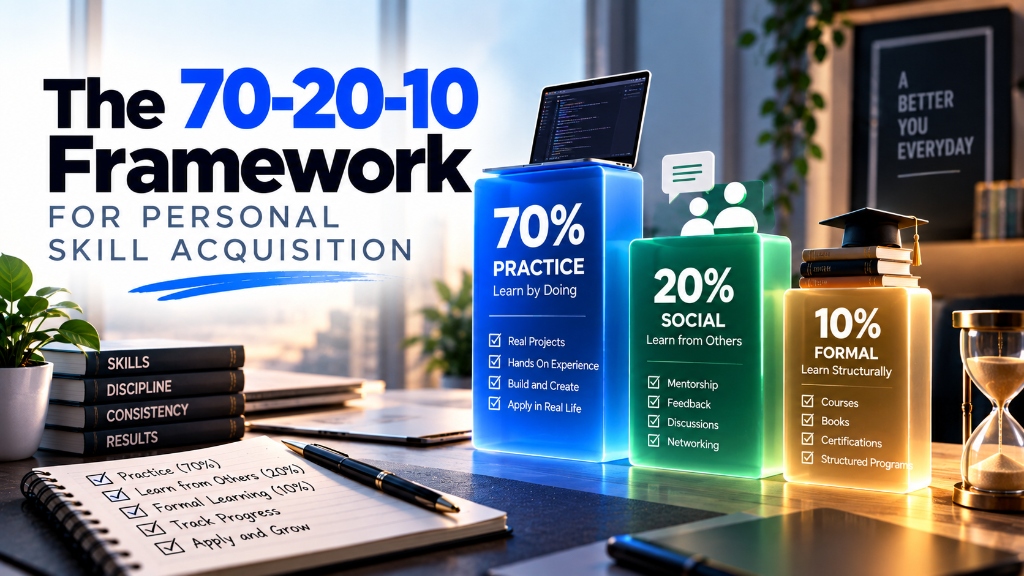
The 70-20-10 Framework for Personal Skill Acquisition
How top performers acquire high-income skills rapidly by balancing real-world execution, mentorship feedback, and formal theory.