

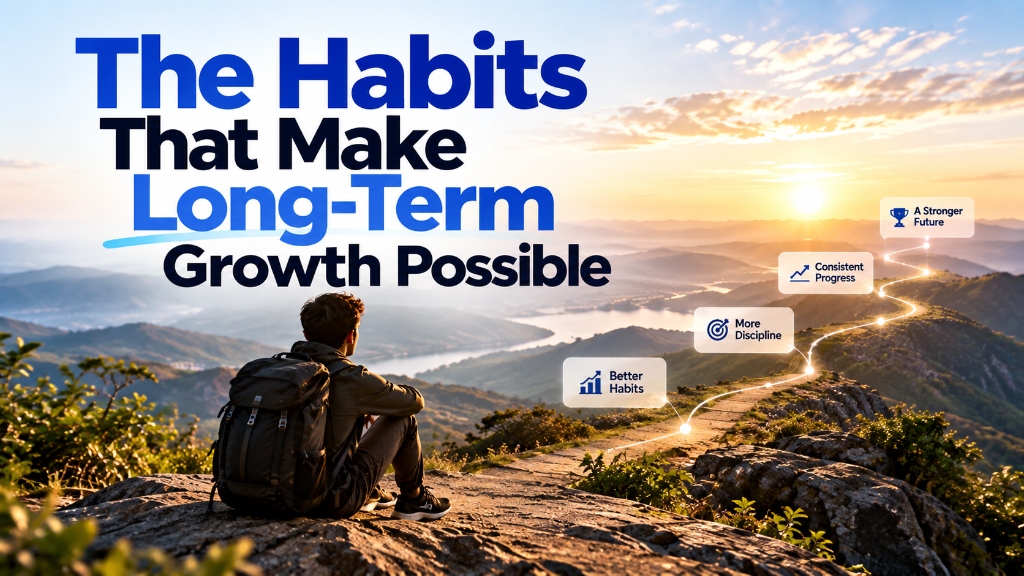
The Habits That Make Long-Term Growth Possible
Five non-negotiable personal habits practiced by peak performers to sustain physical, cognitive, and financial growth.
Disclaimer: This article is for educational purposes only and does not constitute financial or legal advice. We may earn an affiliate commission on links at no cost to you.
Read full disclaimer ↓Listen to "The Habits That Make Long-Term Growth Possible"
Natural Voice Synthesis • Hands-free listening
The habits that make long-term growth possible are low-friction daily routines executed consistently over years rather than sporadic bursts of heroic effort. High performers build resilience, focus, and financial strength by institutionalizing five core routines: deep work blocks, physical training, curated reading, weekly audits, and sleep optimization.
Sustained long-term growth is the compound result of small daily routines executed over extended time horizons. When performance plateaus occur, peak performers simplify their focus down to core foundational habits. Implement daily deep work, rigorous physical conditioning, deliberate reading, weekly calendar reviews, and 8 hours of restorative sleep.
Why consistency beats heroic intensity
most personal growth attempts fail because individuals rely on temporary spikes of intense motivation. Heroic effort for two weeks yields burnout, whereas executing modest, sustainable daily habits over three years produces transformative compound growth.
Mastering core personal habits creates behavioral automaticity, reducing the decision fatigue required to execute high-value tasks.
The 5 Core Growth Habits
Integrate these five non-negotiable habits into your daily operating routine:
1. The Morning Deep Work Block
Reserve 90 minutes every morning for uninterrupted high-advantage creation before allowing outside digital notifications to dictate your attention.
2. Rigorous Physical Maintenance
Engage in 45 minutes of daily physical training (strength work or zone-2 cardio). Physical exercise stimulates Brain-Derived Neurotrophic Factor (BDNF), enhancing cognitive clarity and stress resilience.
3. Curated Information Consumption
Replace passive algorithm-driven social feeds with 30 minutes of daily reading focused on non-fiction books, primary documents, and technical publications.
4. Weekly Retrospective Audits
Spend 30 minutes every Sunday evening auditing your calendar allocations, financial transfers, and project milestones to recalibrate for the upcoming week.
5. Prioritizing Sleep Quality
Maintain 7 to 8 hours of quality sleep as an essential biological performance enhancer. Sleep clears metabolic waste from the brain and consolidates long-term memory.
Mastering your habits gives you control over your time. Mastery over your time gives you sovereignty over your destiny.
Practical example: The Habit Compounding Effect
Consider two professionals over a 3-year period:
- Professional A (Sporadic): Works 14-hour days erratically, sleeps 5 hours, skips workouts, and reads social feeds. Experiences frequent illness, cognitive fog, and high emotional volatility.
- Professional B (Habit-Driven): Executes a 90-minute daily focus block, trains physically for 45 minutes, sleeps 8 hours, and audits progress weekly. Over 3 years, Professional B publishes 3 major industry reports, builds an investment reserve, and achieves elite physical conditioning with zero burnout.
Comparison: Growth Habits vs. Common Defaults
| High-Growth Habit | Typical Default | 3-Year Outcome Difference | Cognitive Energy Impact |
|---|---|---|---|
| 90-Min Morning Focus Block | Checking email upon waking | 500+ hours of creative asset production | High energy preservation |
| Daily Physical Exercise | Sedentary screen time | Increased neuroplasticity & stamina | Stress reduction |
| Curated Book Reading | Algorithmic feed scrolling | 90 books read vs. 5,000 short videos | Deeper mental models |
| 8 Hours Restorative Sleep | Nighttime screen exposure | High executive function vs. chronic fatigue | Brain metabolic cleanup |
Common failure modes in Habit Formation
Watch out for these common habit design mistakes:
- Attempting Too Many Changes Simultaneously: Trying to overhaul sleep, diet, exercise, and work habits overnight leads to rapid habit collapse. Add one habit per month.
- Vague Habit Intentions: Saying “I will read more” fails. Define precise triggers: “I will read 10 pages at 7:00 AM while drinking coffee.”
- Lacking Environment Design: If your phone rests beside your pillow, you’ll scroll. Remove negative environmental friction.
Frequently asked questions
How long does it take for a new habit to become automatic?
Habit automation typically takes between 30 and 60 days of continuous daily repetition. Focus on consistency during the initial 30 days.
what’s the most important habit to start with?
Sleep optimization is the foundation habit because adequate sleep restores cognitive energy, making physical training and deep work significantly easier to execute.
How do I restart a habit after getting sick or traveling?
Lower the activation friction. Perform a micro-version of the habit (such as 5 minutes of reading or 10 minutes of light movement) to rebuild momentum immediately.
Strategic recommendation
pick one of the five core growth habits today, define a specific daily time trigger for it, and execute it consistently for the next 30 days.
Download: The Capital Allocation & Wealth Framework PDF
Get our comprehensive 30-page strategic PDF guide covering asset allocation, business moats, and mental models for long-term compounding.
- High-margin enterprise checklist
- Asset allocation proportion matrix
This article and its associated calculators are for educational and informational purposes only and do not constitute financial, investment, legal, tax, or medical advice. We may earn an affiliate commission on third-party links at zero cost to you. Always consult a licensed professional before making major financial, health, or investment decisions. Read our full Legal & Financial Disclaimer.
Written by Eternity Empire Editorial Team
The Eternity Empire editorial team analyzes personal finance, capital allocation, business strategy, and long-term wealth preservation frameworks.
Was this essay valuable to you?
Help us refine our editorial focus and research priorities.
Reader Discussion (2)
Extremely well-articulated analysis on capital compounding. The breakdown on equity allocation vs active income is spot on.
The distinction between looking rich and building real moats is something more founders need to study deeply.
Explore Eternity Empire
Search insights, browse categories, and discover featured publication guides.
Search Insights
Recent Insights
Further Wisdom & Insights
Explore All Articles →
The Art of Saying No: Protecting Your Highest-Leverage Time
How top executives decline low-value commitments, set strict calendar boundaries, and protect focus time for high-advantage business activities.

The 70-20-10 Framework for Personal Skill Acquisition
How top performers acquire high-income skills rapidly by balancing real-world execution, mentorship feedback, and formal theory.
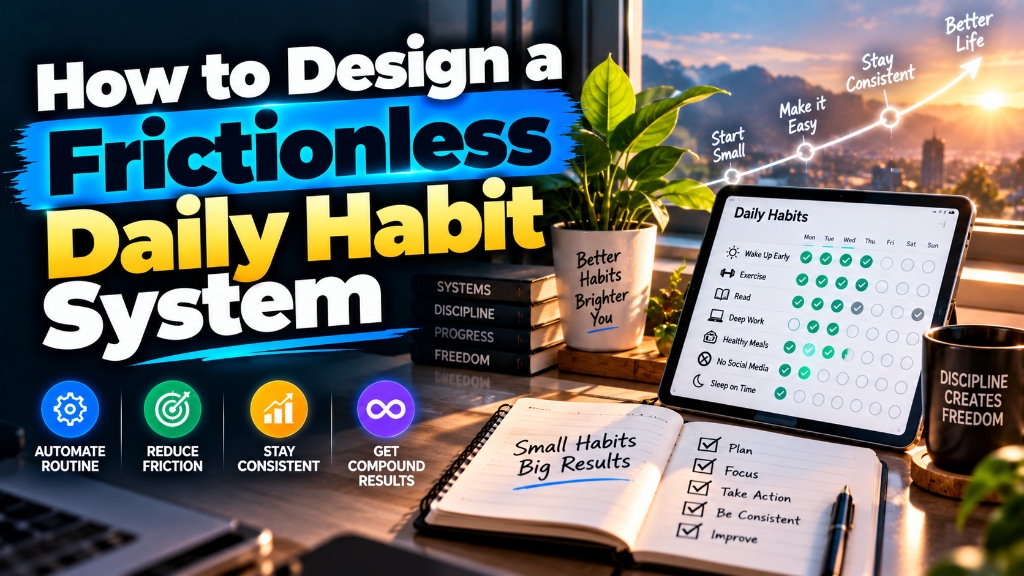
How to Design a Frictionless Daily Habit System
How to build high-performance daily habits by reducing environmental friction, utilizing habit stacking, and tracking streak velocity.