

How to Make High Stakes Decisions with Incomplete Data
How top executives apply the 70% information rule, differentiate Type 1 from Type 2 decisions, and prevent analysis paralysis.

Disclaimer: This article is for educational purposes only and does not constitute financial or legal advice. We may earn an affiliate commission on links at no cost to you.
Read full disclaimer ↓Listen to "How to Make High Stakes Decisions with Incomplete Data"
Natural Voice Synthesis • Hands-free listening
Making high-stakes decisions with incomplete data requires operating with speed and conviction once you possess roughly 70% of the target information. Waiting for 90% or more data creates analysis paralysis, allowing faster competitors to capture market opportunities while your organization stalls in bureaucratic delay.
decision making under uncertainty is the discipline of taking decisive strategic action without complete information. High performers master this by categorizing choices into Type 1 (irreversible door) and Type 2 (reversible door) decisions, enforcing the 70% information threshold, and building pre-planned risk mitigation boundaries.
The cost of Analysis Paralysis
In fast-moving commercial markets, slowness is often more dangerous than making a minor tactical error. Waiting for complete certainty is a hidden form of risk aversion. By the time 100% of the data arrives, market conditions have evolved, customer needs have shifted, and the window of competitive advantage has closed.
The two types of Decisions (Jeff Bezos Framework)
Jeff Bezos formalized decision categorization at Amazon into Type 1 and Type 2 decisions to maintain startup-level agility at scale.
                  ┌── Type 1: One-Way Door (Irreversible / High Risk)
                  │   └── Requires deep board review, slow validation, & risk caps.
All Decisions ────┤
                  └── Type 2: Two-Way Door (Reversible / Low Risk)
                      └── Requires fast execution, 70% data threshold, & immediate iteration.
Type 1 Decisions (One-Way Doors)
These are irreversible or highly consequential decisions: selling your company, launching a major debt-financed acquisition, or changing your core business model. Type 1 choices warrant methodical analysis, scenario testing, and cautious board review because walking back through the door is difficult or impossible.
Type 2 Decisions (Two-Way Doors)
These are easily reversible or low-consequence choices: testing a new marketing channel, tweaking a pricing tier, or hiring a freelance contractor. Type 2 decisions should be made rapidly by individual leaders with 70% of available information, as walking back through the door carries minimal cost.
Strategic comparison: decision making Frameworks
| Decision Model | Data Required | Speed to Execution | Primary Failure Risk | Best Applied To |
|---|---|---|---|---|
| Complete Consensus | 95% - 100% | Extremely Slow | Missed market timing | Major corporate mergers |
| Intuitive Gut Feel | 10% - 20% | Instant | High error rate | Emergency field tactics |
| 70% Information Rule | 60% - 70% | Fast & Agile | Minor tactical missteps | B2B Product & Marketing Iterations |
| Regret Minimization | Variable | Moderate | Over-indexing on edge cases | Career & Life Transformations |
How to Make Decisions Under Uncertainty in 4 Steps
Implementing a high-velocity decision framework requires establishing clear organizational protocols.
- Classify the Decision (Type 1 vs Type 2): Ask: “If this choice fails, can we reverse it within 30 days for under $5,000?” If yes, label it Type 2 and proceed instantly.
- Apply the 70% Information Threshold: Gather data until you have 70% of the ideal information picture. Once reached, force an immediate decision rather than requesting more reports.
- Establish a Worst-Case Risk Mitigation Boundary: Define the absolute worst outcome if the choice fails, and put a pre-planned safety buffer in place.
- Enforce “Disagree and Commit”: Once a decision is finalized, require all team members to back the execution 100%, regardless of their previous internal debates.
Real world case example: Feature Rollout Strategy
Consider an enterprise software company deciding whether to launch a new automated reporting dashboard for their SaaS platform:
The executive team gathers 65% of customer demand data showing strong interest from mid-market clients.
If treated as a Type 1 decision, the company spends four months conducting focus groups, legal reviews, and extensive roadmapping meetings. Competitors launch a similar feature first, capturing market momentum.
If treated as a Type 2 decision, the team realizes a feature rollout is easily reversible via feature flags. They ship a lightweight beta version in two weeks to 10% of users, gather real-time usage data, and iterate rapidly based on actual customer behavior.
Frequently asked questions
What should I do if a Type 2 decision turns out to be wrong?
Reverse the decision immediately without ego. Acknowledge the misstep transparently, capture key lessons in your team wiki, flip the feature flag or process back, and move on to the next execution priority.
How do I overcome the fear of making a wrong decision?
Reframe decision making as a continuous portfolio of bets rather than a single pass/fail test. In a portfolio of 100 fast Type 2 decisions, making 70 good choices rapidly delivers vastly superior enterprise progress compared to making 10 perfect choices slowly.
what’s the Regret Minimization Framework?
Popularized by Jeff Bezos, the Regret Minimization Framework asks: “When I am 80 years old looking back on my life, will I regret not taking this action?” If the answer is yes, take the calculated risk regardless of short-term uncertainty.
Download: The Capital Allocation & Wealth Framework PDF
Get our comprehensive 30-page strategic PDF guide covering asset allocation, business moats, and mental models for long-term compounding.
- High-margin enterprise checklist
- Asset allocation proportion matrix
This article and its associated calculators are for educational and informational purposes only and do not constitute financial, investment, legal, tax, or medical advice. We may earn an affiliate commission on third-party links at zero cost to you. Always consult a licensed professional before making major financial, health, or investment decisions. Read our full Legal & Financial Disclaimer.
Written by Eternity Empire Editorial Team
The Eternity Empire editorial team analyzes personal finance, capital allocation, business strategy, and long-term wealth preservation frameworks.
Was this essay valuable to you?
Help us refine our editorial focus and research priorities.
Reader Discussion (2)
Extremely well-articulated analysis on capital compounding. The breakdown on equity allocation vs active income is spot on.
The distinction between looking rich and building real moats is something more founders need to study deeply.
Explore Eternity Empire
Search insights, browse categories, and discover featured publication guides.
Search Insights
Recent Insights
Further Wisdom & Insights
Explore All Articles →
The Psychology of Long-Term Thinking in a Distracted World
How high performers resist short-term dopamine loops, optimize for second-order consequences, and build compound advantages over 10-year horizons.
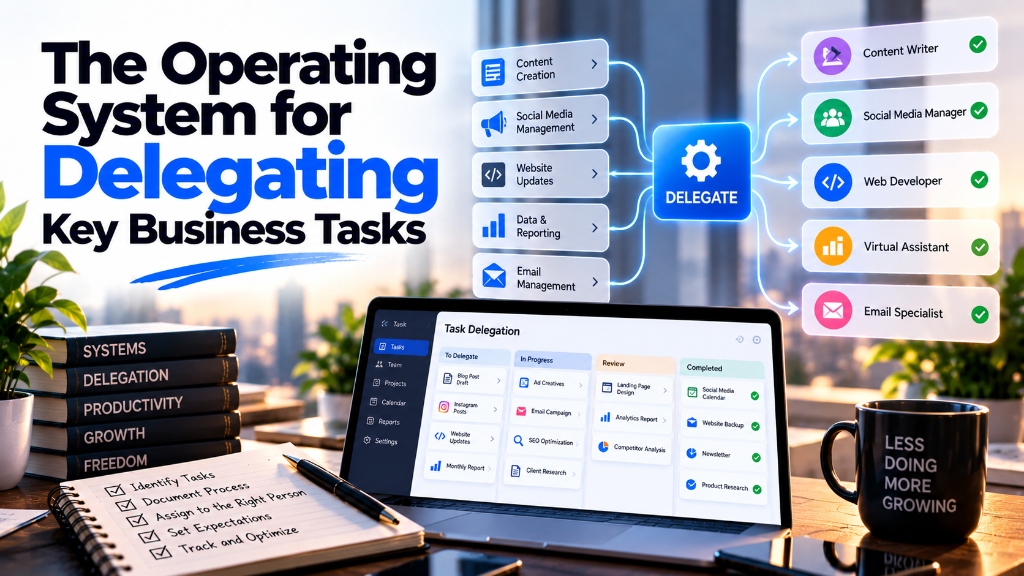
The Operating System for Delegating Key Business Tasks
How entrepreneurs delegate operational tasks effectively using outcome-based accountability, SOP documentation, and async workflows.
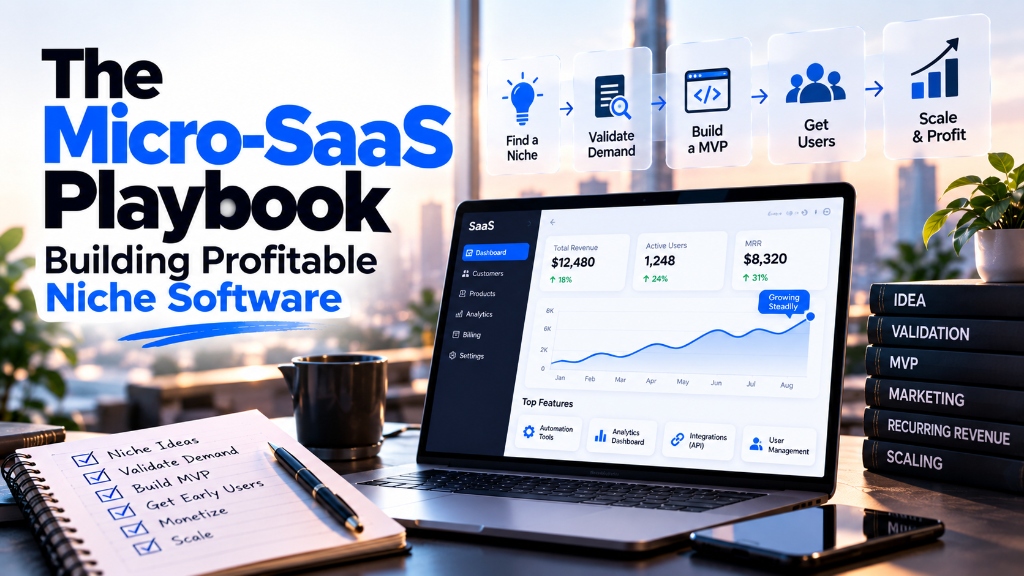
The Micro-SaaS Playbook: Building Profitable Niche Software
How solo developers and small teams build, launch, and scale high-margin niche software products to $10k+ recurring monthly revenue.