
The Psychology of Long-Term Thinking in a Distracted World
How high performers resist short-term dopamine loops, optimize for second-order consequences, and build compound advantages over 10-year horizons.

Disclaimer: This article is for educational purposes only and does not constitute financial or legal advice. We may earn an affiliate commission on links at no cost to you.
Read full disclaimer ↓Listen to "The Psychology of Long-Term Thinking in a Distracted World"
Natural Voice Synthesis • Hands-free listening
Mastering the psychology of long-term thinking requires delaying immediate gratification in favor of compound outcomes evaluated over 10-year horizons. In a modern economy engineered to capture short-term attention through instant notifications and quarterly market metrics, leaders who maintain long-term focus build massive competitive moats.
Long-term thinking is the practice of prioritizing multi-year compound growth over immediate short-term payoffs. Cultivate long-term strategic focus by evaluating second-order decision consequences, protecting deep work blocks from digital distraction, and optimizing for compounding assets rather than vanity metrics.
The short-Term Trap: Hyperbolic Discounting
Human psychology is evolutionary wired for hyperbolic discounting: choosing smaller immediate rewards over significantly larger future payoffs. Primitive environments favored immediate calorie consumption, but modern financial and enterprise success requires the exact opposite orientation. Surrendering to short-term impulses creates catastrophic long-term debt across health, finances, and enterprise strategy.
The power of Second-Order Thinking
Most people evaluate choices based on first-order consequences (immediate feelings), ignoring second and third-order consequences (cumulative long-term impacts).
Choice: Skipping Daily Focus Work to Process Emails
├── First-Order Consequence: Immediate relief & feeling responsive (Feels Good)
├── Second-Order Consequence: Zero strategic momentum or asset creation (Frustration)
└── Third-Order Consequence: Career stagnation & vulnerability to disruption (Ruin)- First-Order Thinking: “Eating fast food tastes good right now.”
- Second-Order Thinking: “Eating fast food daily leads to sluggish energy, weight gain, and long-term health decline.”
Strategic comparison: Decision Horizons
| Horizon Metric | Short-Term Focus (1 - 90 Days) | Long-Term Focus (5 - 10 Years) |
|---|---|---|
| Primary Metric | Quarterly revenue & social likes | Brand equity, moat width, & capital compounding |
| Product Strategy | Quick feature hacks & discount promotions | Core architectural excellence & customer trust |
| Financial Allocation | High consumer spending & short trades | Reinvested capital & compounding asset acquisition |
| Personal Bandwidth | Constant context-switching & email checking | Protected 4-hour deep work focus blocks |
How to Cultivate 10-Year Strategic Horizons in 4 Steps
Shifting your mind to long-term compounding requires building structural barriers against daily noise.
- Conduct 10-Year Retro-Projections: Ask yourself: “If I repeat my current daily habits every day for ten years, where do I land financially, physically, and professionally?”
- Evaluate Decisions via Second-Order Questions: Before taking major strategic actions, ask: “And then what happens 12 months from now? And what happens 5 years from now?”
- Institute a Distraction Fast: Remove social media feeds, notification badges, and real-time news alerts from primary work devices to restore cognitive deep work capacity.
- Optimize for Asymmetry Over Velocity: Focus on building assets that compound asynchronously (code, content, capital) rather than chasing rapid daily task completion.
Real world case example: Content Strategy Trade-Offs
Consider two digital publishing companies competing in financial media:
Publisher A focuses on short-term clickbait: sensationalist headlines, celebrity news, and constant trending drama. Traffic spikes initially, but readers bounce quickly. When algorithms shift, traffic collapses by 80%, leaving zero brand loyalty.
Publisher B focuses on long-term evergreen guides: comprehensive frameworks on asset allocation, tax efficiency, and business building. Traffic builds slowly over the first two years. By year five, Publisher B ranks for thousands of high-intent search queries, generating millions of steady, compounding monthly views without spending ad capital.
Frequently asked questions
How do I stay focused on long-term goals when short-term progress feels slow?
Track lead measures (daily actions within your control) rather than lag measures (long-term results). If you execute your daily lead measures consistently, compound math guarantees the long-term result will materialize.
Can long-term thinking coexist with fast execution?
Yes, long-term vision dictates where you are going, while fast execution determines how quickly you move. High performers combine long-term strategic patience with urgent daily tactical execution.
what’s the most effective way to resist daily digital distractions?
Design your environment to make distraction difficult. Put your phone in a separate room during deep work sessions, use website blockers for news portals, and schedule email checks to specific afternoon windows.
Download: The Capital Allocation & Wealth Framework PDF
Get our comprehensive 30-page strategic PDF guide covering asset allocation, business moats, and mental models for long-term compounding.
- High-margin enterprise checklist
- Asset allocation proportion matrix
This article and its associated calculators are for educational and informational purposes only and do not constitute financial, investment, legal, tax, or medical advice. We may earn an affiliate commission on third-party links at zero cost to you. Always consult a licensed professional before making major financial, health, or investment decisions. Read our full Legal & Financial Disclaimer.
Written by Eternity Empire Editorial Team
The Eternity Empire editorial team analyzes personal finance, capital allocation, business strategy, and long-term wealth preservation frameworks.
Was this essay valuable to you?
Help us refine our editorial focus and research priorities.
Reader Discussion (2)
Extremely well-articulated analysis on capital compounding. The breakdown on equity allocation vs active income is spot on.
The distinction between looking rich and building real moats is something more founders need to study deeply.
Explore Eternity Empire
Search insights, browse categories, and discover featured publication guides.
Search Insights
Recent Insights
Further Wisdom & Insights
Explore All Articles →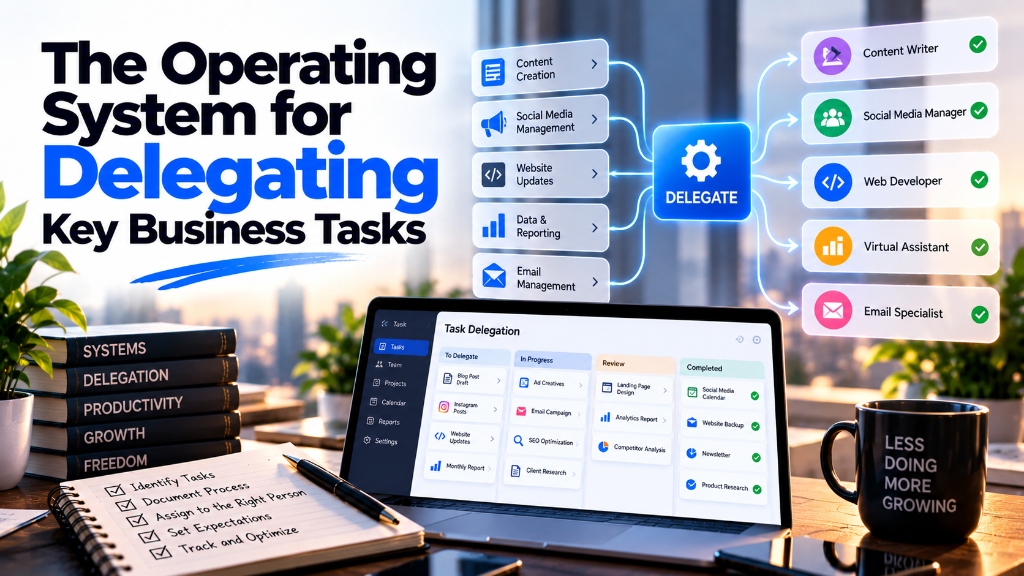
The Operating System for Delegating Key Business Tasks
How entrepreneurs delegate operational tasks effectively using outcome-based accountability, SOP documentation, and async workflows.

The Micro-SaaS Playbook: Building Profitable Niche Software
How solo developers and small teams build, launch, and scale high-margin niche software products to $10k+ recurring monthly revenue.

The Art of Saying No: Protecting Your Highest-Leverage Time
How top executives decline low-value commitments, set strict calendar boundaries, and protect focus time for high-advantage business activities.