

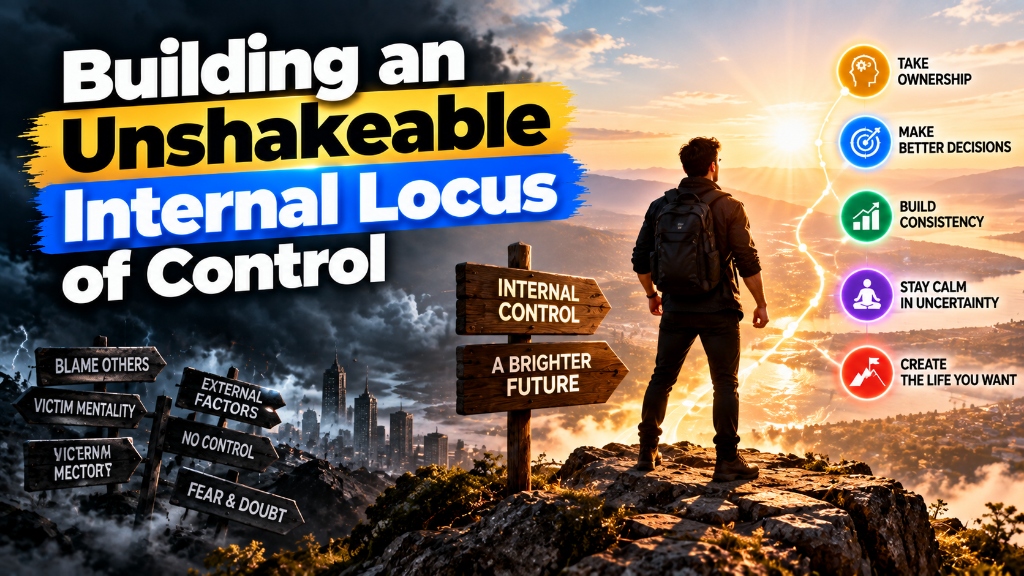
Building an Unshakeable Internal Locus of Control
How top entrepreneurs eliminate victim mentalities, accept total accountability, and take proactive control over life outcomes.
Disclaimer: This article is for educational purposes only and does not constitute financial or legal advice. We may earn an affiliate commission on links at no cost to you.
Read full disclaimer ↓Listen to "Building an Unshakeable Internal Locus of Control"
Natural Voice Synthesis • Hands-free listening
Building an unshakeable internal locus of control requires adopting the belief that your decisions, actions, and character determine your life outcomes. Individuals with an internal locus of control view obstacles as personal challenges to solve, whereas those with an external locus blame bad luck, economic conditions, or external people for failure.
An internal locus of control is the psychological conviction that you control your destiny through intentional choices and effort. Develop an internal locus by eliminating victim vocabulary, taking 100% responsibility for every business outcome, and focusing energy exclusively on proactive problem-solving.
Internal vs External Locus of Control
Psychologist Julian Rotter conceptualized Locus of Control as the degree to which people believe they have control over the outcome of events in their lives:
- External Locus of Control: Believing outcomes are governed by luck, fate, algorithms, macroeconomic conditions, or malicious actors. This frame breeds helplessness, passivity, and chronic resentment.
- Internal Locus of Control: Believing outcomes stem directly from personal agency, strategic adaptation, resourcefulness, and disciplined effort. This frame fosters resilience, high output, and leadership.
The extreme ownership principles
extreme ownership dictates that all responsibility for success or failure rests on the leader. When a marketing campaign fails, a project runs over budget, or a team member underperforms, an internal locus leader asks: “What did I fail to communicate, test, or prepare?”
[ External Locus Frame ] ──> "The market crashed and clients canceled, so we failed."
                                   vs
[ Internal Locus Frame ] ──> "We failed to build a sufficient cash buffer and failed to diversify client concentration."
Strategic comparison: Mindset Locus Impact
| Life Dimension | External Locus Pattern | Internal Locus Pattern | Long-Term Trajectory |
|---|---|---|---|
| Business Downturn | Blames algorithms, taxes, & economy | Audits offer, positioning, & cash flow | Recovers rapidly via strategy pivot |
| Personal Health | Blames genetics & busy schedule | Audits nutrition, sleep, & workout consistency | Achieves peak physical performance |
| Career Progress | Complains about office politics | Builds high-advantage skills & output proof | Commands premium income & autonomy |
| Financial Security | Expects government or employer protection | Builds cash reserves & compounding assets | Reaches total financial independence |
How to Strengthen Your Internal Locus in 4 Steps
Reframing your psychological relationship with personal responsibility requires continuous daily vigilance.
- Audit Your Language for Victim Vocabulary: Eliminate phrases like “I had no choice,” “They ruined my plan,” or “It wasn’t my fault.” Replace them with “I chose to,” “I permitted,” or “Here is how I fix it.”
- Conduct a Post-Mortem Accountability Audit: After any failure, list three specific choices you made that contributed to the bad outcome and three actions you’ll take to prevent repetition.
- Practice Voluntary Hardship: Regularly expose yourself to physical or cognitive challenges (ice baths, intense workouts, fasts) to prove to your subconscious that you control your body and mind.
- Take Immediate Proactive Action: When faced with a crisis, identify the single smallest constructive action you can take right now and execute it immediately without complaining.
Real world case example: Startup Revenue Collapse
Consider two founders who both experience a 40% revenue drop after a major platform algorithm update:
Founder A posts on social media complaining about platform greed, petitions regulators, and spends two months waiting for the algorithm to revert. Cash runs out, and the company goes bankrupt.
Founder B accepts total responsibility for building a business dependent on a single third-party channel. Within 48 hours, Founder B launches a direct outreach campaign, builds an email marketing funnel, and diversifies distribution across three independent channels. Revenue recovers within 90 days.
Frequently asked questions
Isn’t it unrealistic to take responsibility for events like natural disasters or market crashes?
You can’t control the occurrence of an external event, but you are 100% responsible for your level of preparation and your emotional response to it. Taking ownership means accepting responsibility for how you respond to uncontrollable circumstances.
Does an internal locus of control cause excessive self-blame?
An internal locus of control leads to constructive problem-solving when paired with self-compassion. The goal isn’t self-flagellation or shame, but objective analysis: acknowledging your role so you can take intelligent corrective action.
How does an internal locus of control affect team culture?
Leaders who model extreme ownership create high-accountability team cultures. When a leader admits mistakes transparently and focuses on solutions, team members stop making excuses and take ownership of their respective departments.
Download: The Capital Allocation & Wealth Framework PDF
Get our comprehensive 30-page strategic PDF guide covering asset allocation, business moats, and mental models for long-term compounding.
- High-margin enterprise checklist
- Asset allocation proportion matrix
This article and its associated calculators are for educational and informational purposes only and do not constitute financial, investment, legal, tax, or medical advice. We may earn an affiliate commission on third-party links at zero cost to you. Always consult a licensed professional before making major financial, health, or investment decisions. Read our full Legal & Financial Disclaimer.
Written by Eternity Empire Editorial Team
The Eternity Empire editorial team analyzes personal finance, capital allocation, business strategy, and long-term wealth preservation frameworks.
Was this essay valuable to you?
Help us refine our editorial focus and research priorities.
Reader Discussion (2)
Extremely well-articulated analysis on capital compounding. The breakdown on equity allocation vs active income is spot on.
The distinction between looking rich and building real moats is something more founders need to study deeply.
Explore Eternity Empire
Search insights, browse categories, and discover featured publication guides.
Search Insights
Recent Insights
Further Wisdom & Insights
Explore All Articles →
The Psychology of Long-Term Thinking in a Distracted World
How high performers resist short-term dopamine loops, optimize for second-order consequences, and build compound advantages over 10-year horizons.

The Art of Saying No: Protecting Your Highest-Leverage Time
How top executives decline low-value commitments, set strict calendar boundaries, and protect focus time for high-advantage business activities.
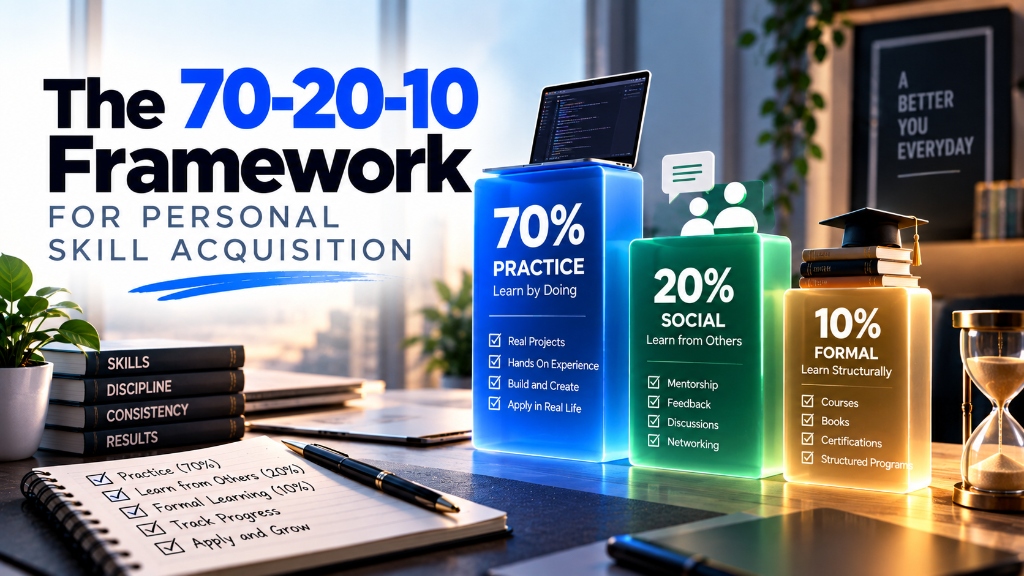
The 70-20-10 Framework for Personal Skill Acquisition
How top performers acquire high-income skills rapidly by balancing real-world execution, mentorship feedback, and formal theory.